


Thinking about a hair transplant often brings up more questions than answers. You might be wondering how many grafts you'll need, whether the procedure hurts, how long the results take to appear or whether transplanted hair really lasts.
A hair transplant isn't something you should decide after reading a single page or seeing one impressive before-and-after photograph. Your hair loss pattern, donor area, age, scalp condition and future hair loss can all affect what's possible. Recovery and aftercare matter too.
This guide answers the questions people commonly ask before having a hair transplant in Turkey. We'll look at the different techniques, suitability, graft numbers, costs, possible risks, recovery and what to consider when choosing a clinic, giving you a clearer picture of what comes before, during and after treatment.
Am I a Good Candidate for a Hair Transplant?
A hair transplant isn't automatically suitable for everyone with thinning or hair loss. Hair transplant eligibility depends on several things, including why you're losing hair, how your hair loss is developing, the amount of healthy donor hair available and the condition of your scalp.
A suitable hair transplant candidate generally needs enough healthy follicles in the donor area to provide grafts for the areas where hair has become thinner or disappeared. Your pattern of hair loss is important as well. When hair loss is still changing quickly, it may be sensible to monitor the situation before deciding on surgery.
Does age affect eligibility?
There isn't a single minimum age for hair transplant treatment that makes someone suitable automatically.
A younger individual may still be going through changes in their hairline or experiencing ongoing hair loss. Having treatment too early can make future planning more complicated because the surrounding, non-transplanted hair may continue to thin.
So, who is suitable for hair transplant treatment isn't determined by age alone. The wider picture matters, including the pattern of hair loss, donor supply, scalp condition and what you want the treatment to achieve.
Donor density is particularly important. A transplant involves moving follicles from one part of the scalp to another, so the amount and quality of available donor hair naturally place limits on the coverage that can be achieved.
Is a Hair Transplant Worth It?
A hair transplant is a long-term decision, so it's understandable to ask whether the results will make the treatment worthwhile.
For some individuals, restoring areas affected by thinning or baldness can make a noticeable difference to the appearance of their hair. The result, however, depends on several individual factors. Existing hair loss, donor supply, hair characteristics and healing can all influence the final outcome.
Before booking treatment, it's useful to understand what a transplant can do, as well as where it has limitations.
What Can You Realistically Expect From a Hair Transplant?
When someone asks if a hair transplant is worth it, the answer depends largely on what they expect from the procedure.
A transplant moves healthy hair follicles from a donor area to parts of the scalp affected by hair loss. The goal is to create a natural-looking improvement, not to recreate the exact density or hairline you had earlier in life.
Your hair transplant expectations should therefore be realistic from the beginning. The amount of coverage possible depends on your existing hair, donor supply and the pattern and extent of hair loss.
Some individuals may need more than one procedure over time. Others may achieve the coverage they want with one treatment. There isn't a standard result that applies to everyone.
What Are the Pros and Cons?
Understanding the hair transplant pros and cons can help you have a more informed discussion with your clinical team.
One potential benefit is that transplanted follicles can continue to grow hair for many years. Treatment can also restore hair to areas where it has become noticeably thinner or has been lost.
There are limitations to consider too. A transplant can't provide an unlimited number of follicles because your donor area is finite. Taking too many grafts can also affect the appearance and density of that area.
Recovery takes time as well. In addition, hair that wasn't transplanted can continue to thin in the future. That's why long-term planning is an important part of the process.
Why Can't Hair Transplant Results Be Guaranteed?
People often search for a hair transplant success rate, hoping to find one percentage that tells them what result to expect. In reality, there isn't a single figure that applies to every individual.
Hair characteristics, donor supply, the pattern of hair loss and individual healing can all vary. These differences mean that two people having similar procedures may not experience exactly the same outcome.
What Are the Different Types of Hair Transplants?
When researching the types of hair transplants, you'll usually come across FUE, FUT and DHI.
These techniques differ in how follicles are removed and, in some cases, how they're placed into the recipient area. The most appropriate option depends on your hair loss, donor area, treatment goals and individual circumstances.
FUE hair transplant
FUE involves removing individual hair follicles from the donor area before placing them into areas affected by hair loss.
One of the main differences between FUE and FUT is the extraction method. FUE doesn't involve removing a strip of scalp, so it doesn't create the long linear scar associated with FUT. Small extraction marks can still be visible while the skin heals.
FUT hair transplant
FUT involves removing a strip of skin containing hair follicles from the donor area. Individual follicles are then separated from the strip and transplanted into the recipient area.
The main difference in FUE vs FUT treatment is how the follicles are harvested and the resulting type of scarring.
DHI hair transplant
DHI uses individually extracted follicles and an implanter device to place them directly into the recipient area.
When comparing FUE vs DHI, the main distinction is the way the extracted follicles are implanted. In suitable cases, DHI may also allow follicles to be placed between existing hairs.
How Many Hair Transplant Grafts Do I Need?
The number of grafts needed depends on your hair loss pattern, the size of the treatment area, donor hair density and the level of coverage you want. A smaller hairline restoration may require fewer grafts, while wider thinning across the scalp can require more. As a guide, 2,000 hair grafts may be suitable for some cases, while 3,000 hair grafts or more may be needed for broader coverage. A hair transplant graft calculator can provide an estimate, but an individual assessment is needed to determine the appropriate number.
What is a hair graft?
A graft is a small unit of tissue containing hair follicles. One graft can contain between one and four follicles, so 2,000 hair grafts doesn't necessarily mean exactly 2,000 individual hairs.
The total number of hairs depends on how many follicles are contained within each graft.
How many grafts might I need?
Someone with mild thinning around the hairline may need considerably fewer grafts than someone who needs coverage across the crown and larger areas of the scalp.
Donor supply is just as important as the size of the treatment area. Removing too many grafts can reduce density in the donor area, so planning needs to balance the desired coverage with the long-term condition of the donor hair.
Can a hair graft calculator give me an answer?
A hair transplant graft calculator can provide a rough starting point based on the areas affected by hair loss. It can't replace an individual assessment.
Photographs may also allow a clinic to review your hair loss remotely, but the final graft requirement needs to take your donor area, hair characteristics and longer-term treatment plan into account.
How Much Does a Hair Transplant Cost?
The hair transplant price in Turkey can vary depending on the number of grafts required, the technique used and what is included in the treatment package. Current prices can start from around £1,500 to £4,000, although the final cost will depend on your individual treatment plan.
What Affects the Cost of a Hair Transplant?
The number of grafts needed is one of the main factors affecting the price. A smaller treatment area may require fewer grafts, while more extensive hair loss can require a larger number. The chosen technique, treatment complexity and additional services can also affect the overall cost.
Some hair transplant packages in Turkey may include accommodation, airport and clinic transfers, medication, aftercare and follow-up support. Package inclusions can vary, so it's important to check what is included before booking.
For this reason, the hair transplant cost should be considered alongside the treatment plan and package inclusions, rather than simply comparing the headline price between clinics.
What Should You Check Before Booking?
Before booking a hair transplant, it helps to look beyond the advertised price. A few practical checks can help you understand what the treatment involves and what you're agreeing to.
Treatment Plan
Make sure the proposed treatment is based on your hair loss pattern, donor area and the amount of coverage you want. The number of grafts should have a clear reason behind it.
Technique Used
Ask which technique is being recommended and why. FUE, DHI and other approaches can differ in how follicles are extracted and implanted.
What's Included
Check whether the quoted price covers accommodation, transfers, medication, aftercare or any other services. Package details can vary considerably.
Clinical Team
Find out who will assess your hair loss and who will perform or supervise the procedure. You should be able to understand the qualifications and role of the clinical team.
Aftercare and Support
Ask what happens after the procedure, including washing instructions, recovery guidance and support once you return home. Good aftercare should be part of your planning, not an afterthought.
Does a Hair Transplant Hurt?
One of the most common concerns before treatment is whether a hair transplant is painful. The procedure is generally carried out using local anaesthesia, which numbs the scalp during the extraction and implantation stages. You may feel some pressure or brief discomfort while the anaesthetic is administered, but the treatment area should remain numb during the procedure.
What Does a Hair Transplant Feel Like?
The experience can vary from person to person. The initial injections used for hair transplant local anaesthesia may cause a short-lived stinging sensation. Once the scalp is numb, you may notice movement or pressure without significant pain.
What About Pain After a Hair Transplant?
Some hair transplant discomfort can occur as the anaesthetic wears off. Tenderness, sensitivity, tightness, redness or mild swelling may be experienced during the early recovery period. Your clinic should provide appropriate aftercare instructions and explain what to expect during healing.
If you're concerned about hair transplant pain, discuss your concerns during the consultation so you understand how discomfort will be managed before, during and after the procedure.
Will a Hair Transplant Look Natural?
A well-planned transplant should work with your existing hair rather than appearing as a separate layer of newly placed follicles.
A natural-looking hair transplant depends on several details, particularly hairline design, graft positioning, growth direction and the way transplanted hair blends with the surrounding hair.
What Makes a Hairline Look Natural?
A natural-looking hair transplant hairline needs appropriate angles, direction and density.
Individual grafts are usually important at the front of the hairline because they can help create a softer transition between the forehead and existing hair. A uniform or overly straight edge may not blend as naturally with the surrounding growth.
Age and future hair loss need consideration too.
For example, creating a very low hairline without accounting for future changes in the individual's hair could affect the overall appearance later. The treatment plan therefore needs to consider both the hair loss visible today and the donor supply available for future needs.
What Should You Look for in Before-and-After Photos?
Hair transplant before and after photographs can be useful when researching a clinic, but it's worth looking beyond the most dramatic transformation.
Compare photographs taken from similar angles and under similar lighting. Look at the position of the hair, the condition of the hairline and how the transplanted area blends with the surrounding hair.
An unnatural hair transplant can occur when graft direction, hairline design or density doesn't follow the person's natural growth pattern.
Photographs can provide useful context, but they can't predict exactly what you'll experience. Hair characteristics, donor supply, healing and future hair loss all affect the final appearance.
Is a Hair Transplant Permanent?
A hair transplant is intended to provide long-lasting, often permanent growth because follicles are taken from a more stable donor area. However, existing non-transplanted hair can continue to thin over time. Final results vary depending on donor hair, hair loss pattern, individual healing and the long-term treatment plan.
- Transplanted hair is intended to last: Hair follicles moved from a suitable donor area are generally selected because they are more resistant to the effects of pattern hair loss.
- New growth takes time: The transplanted hairs don't appear fully grown immediately. Growth develops gradually as the follicles recover and begin producing new hair.
- Some shedding can be normal: Transplanted hairs may shed during the early stages of recovery before new growth begins. This does not necessarily mean the transplant has failed.
- Existing hair can continue to thin: A transplant doesn't prevent untreated, non-transplanted hair from becoming thinner over time. This is why long-term planning is important.
- Results vary between individuals: The final appearance can depend on factors such as donor hair, existing hair loss, hair characteristics and how the scalp heals.
How Long Does a Hair Transplant Last?
A reasonable approximate range is 10–20 years or longer. Transplanted follicles are expected to continue producing hair for many years and can provide permanent growth.
That doesn't mean every hair on your scalp is protected from future thinning.
This distinction is important. Hair moved during the procedure can retain characteristics associated with its donor area, while existing hair that wasn't transplanted can remain susceptible to ongoing hair loss.
Can Transplanted Hair Fall Out?
Some shedding after a transplant is normal.
Transplanted hairs can shed during the early stages of recovery before new growth begins. Seeing hairs fall out shortly after treatment therefore doesn't necessarily mean the transplant has failed.
Hair loss after hair transplant can also refer to continued thinning of the original hair that wasn't transplanted. For individuals who are still experiencing active hair loss, this is an important part of long-term planning.
A second procedure may sometimes be discussed later if further hair loss occurs or additional coverage is required.
Results naturally vary between individuals. Donor quality, hair characteristics, the area being treated, healing and future hair loss can all influence the outcome.
What Are the Risks of a Hair Transplant?
A hair transplant is a surgical procedure, so some risks and temporary side effects can occur. Common effects during recovery may include:
- Redness and swelling: These can develop around the treated areas during the early stages of healing. They are generally temporary and should gradually settle as the scalp recovers.
- Tenderness, itching or tightness: The scalp may feel sensitive or uncomfortable after treatment, particularly while the anaesthetic wears off. These sensations can occur during the initial recovery period.
- Small scabs or crusts: Tiny scabs can form around the transplanted follicles as the scalp heals. Following the recommended aftercare instructions can help protect the treated area during this stage.
- Temporary shedding: Some transplanted or existing hairs may shed after the procedure. This can occur during the early stages before new hair growth becomes visible.
Less common hair transplant complications can include infection, bleeding, folliculitis, scarring or uneven hair growth. Individual risks can vary, so these should be discussed during your consultation before treatment.
Are There Any Complications or Scarring?
Less common hair transplant complications can include bleeding, infection, folliculitis, uneven graft growth and thinning in the donor area.
FUE doesn't create the long linear scar associated with strip surgery. However, individual extraction points can leave small round scars. How visible these are can depend on the extraction technique, healing and how the donor area is managed.
When Should You Contact the Clinic?
Severe or increasing pain, excessive bleeding, pus or discharge, persistent or worsening redness or swelling, or fever should be reported to your doctor or clinic promptly.
These symptoms can sometimes indicate an infection or another problem that needs medical attention.
Your individual level of risk can also depend on your medical history, scalp condition, donor area and the procedure being considered. Discuss these details with the clinical team before treatment so you understand the risks relevant to you.
How to Choose the Right Hair Transplant Clinic
Choosing a hair transplant clinic involves more than comparing prices or looking at a few before-and-after photographs. The clinic’s medical team, treatment approach, patient care and aftercare can all influence your overall experience and the results you can realistically expect.
Check the Clinical Team
Start by finding out who will assess your hair loss and who will perform or supervise the procedure. Look at the qualifications, experience and role of the medical professionals involved. You should also understand who is responsible for planning the graft number, hairline and treatment approach.
Look at Real Hair Transplant Results
Before-and-after photographs can give you an idea of the type of results a clinic achieves. Look for cases with similar hair loss patterns, rather than focusing only on dramatic transformations. Check whether photographs show comparable angles, lighting and stages of growth.
Understand the Recommended Technique
A reputable clinic should be able to explain why a particular technique is being recommended. Ask about options such as FUE or DHI and how the chosen approach relates to your donor area, hair loss pattern and treatment goals. Be cautious of claims that one technique is automatically suitable for everyone.
Check Reviews and Patient Experiences
Hair transplant clinic reviews can provide useful insight into communication, organisation and aftercare. However, reviews should be considered alongside clinical information and real treatment results rather than used as the only deciding factor.
Ask About Aftercare
Your relationship with a clinic shouldn't end when the procedure is finished. Before booking, ask what aftercare is provided, how you will receive recovery instructions and who you can contact if you have concerns after returning home.
A good comparison should give you a clear understanding of the treatment, the clinical team, expected results, risks, costs and support available before you make your decision.
What Happens During a Hair Transplant Consultation?
A hair transplant consultation usually starts with a discussion about your hair loss, medical history and treatment goals. The clinician will examine your scalp, assess your hair density and donor area, and determine whether a transplant may be suitable.
They may also discuss the number of grafts you might need, the technique recommended and what recovery could involve. You should have the opportunity to ask questions about the procedure, risks, aftercare and expected results. A personalised treatment plan and cost estimate may then be provided based on your individual needs. Below are some of the steps of a hair transplant consultation.
Hair transplant assessment
Your hair-loss pattern, scalp and existing hair are reviewed. Photographs may be used as part of the initial assessment.
Hair transplant donor area assessment
The donor area is assessed for hair density and follicle quality. This helps the clinical team understand how many suitable grafts may be available.
Medical history
Your relevant medical background and hair-loss history are discussed so the team can plan treatment appropriately.
Hair transplant consultation questions
This is your opportunity to ask about the recommended technique, graft numbers, hairline design, recovery, possible risks and aftercare.
Treatment plan
If you're considered suitable, the proposed procedure and realistic expectations for treatment in Turkey can be discussed.
For a more detailed explanation, you can read our Turkey Hair Transplant Guide.
The consultation isn't simply about being given a graft number. It's a chance for the clinical team to assess whether treatment is appropriate, explain the available options and give you a clearer idea of what can realistically be achieved before travelling to Turkey.
What Should You Know Before Booking a Hair Transplant?
Before booking a hair transplant, it’s worth getting a clear idea of what the procedure can and can’t do. You’ll want to know whether you’re a suitable candidate, which technique may work for you, what recovery involves, and what kind of result you can realistically expect.
Hair transplant checklist
- Cause and stage of hair loss: Your surgeon should first look at why you’re losing hair and how advanced the hair loss is. This helps determine whether a transplant is suitable.
- Donor hair availability: A transplant relies on healthy hair follicles from the donor area, usually at the back or sides of the scalp. If there isn’t enough donor hair, the amount of coverage may be limited.
- Realistic expectations: A hair transplant can improve coverage, but it may not bring back the same density you had when you were younger. Your surgeon should explain what result is realistic for your hair and donor supply.
- Hair transplant technique: FUE and FUT are two commonly used techniques. Your surgeon can explain which option may be more suitable based on your hair loss and the condition of your donor area.
- Recovery and growth: The scalp needs time to heal after the procedure, and new hair growth takes several months. The final result won’t be visible straight away, so it’s important to know what to expect during the different stages of recovery.
- Long-term hair loss: A transplant doesn’t stop natural hair loss in areas that haven’t been treated. Your surgeon may discuss treatments or a longer-term plan to help protect your existing hair.
- Surgeon and clinic: Check the surgeon’s qualifications, experience and previous results before booking. A proper consultation should give you a chance to ask questions and understand the procedure rather than feeling pushed into a decision.
- Total cost: Ask exactly what the quoted price covers. This may include the procedure, consultations, follow-up care and any additional treatment that has been recommended.
Questions to ask before hair transplant
Before booking a hair transplant, it helps to know exactly what you're agreeing to. Asking the right questions can clarify the treatment plan, expected results, costs, recovery and aftercare, so you can make an informed decision.
Here are some useful questions to ask:
- Who will assess my hair loss and donor area?
- Who will perform each part of the procedure?
- How many grafts do I actually need, and why?
- Which technique is suitable for my hair and pattern of loss?
- What will happen to my existing hair as I get older?
- Can I see results from patients with a similar level of hair loss?
- What are the possible risks and what would recovery involve?
- What does the quoted price include, and what isn't included?
- How many days it will take to complete the process?
Meet the Hair Transplant Team and Explore Este Medical’s Experience
Choosing a hair transplant can raise plenty of questions, from your suitability and graft requirements to recovery and aftercare. Having access to an experienced clinical team can help you understand the process and what may be realistic for your individual case.
Meet the Hair Transplant Team
Dr Alaaddin Karabacak, MD is listed as an expert hair transplant surgeon, with more than 35 years of experience and over 9,000 procedures. He determines the clinically appropriate graft number and supervises the procedure. Derya Köroğlu and Mesut Köroğlu are also part of the hair transplant team, with experience in extraction and implantation.
Celebrities and Public Figures Who Have Used the Service
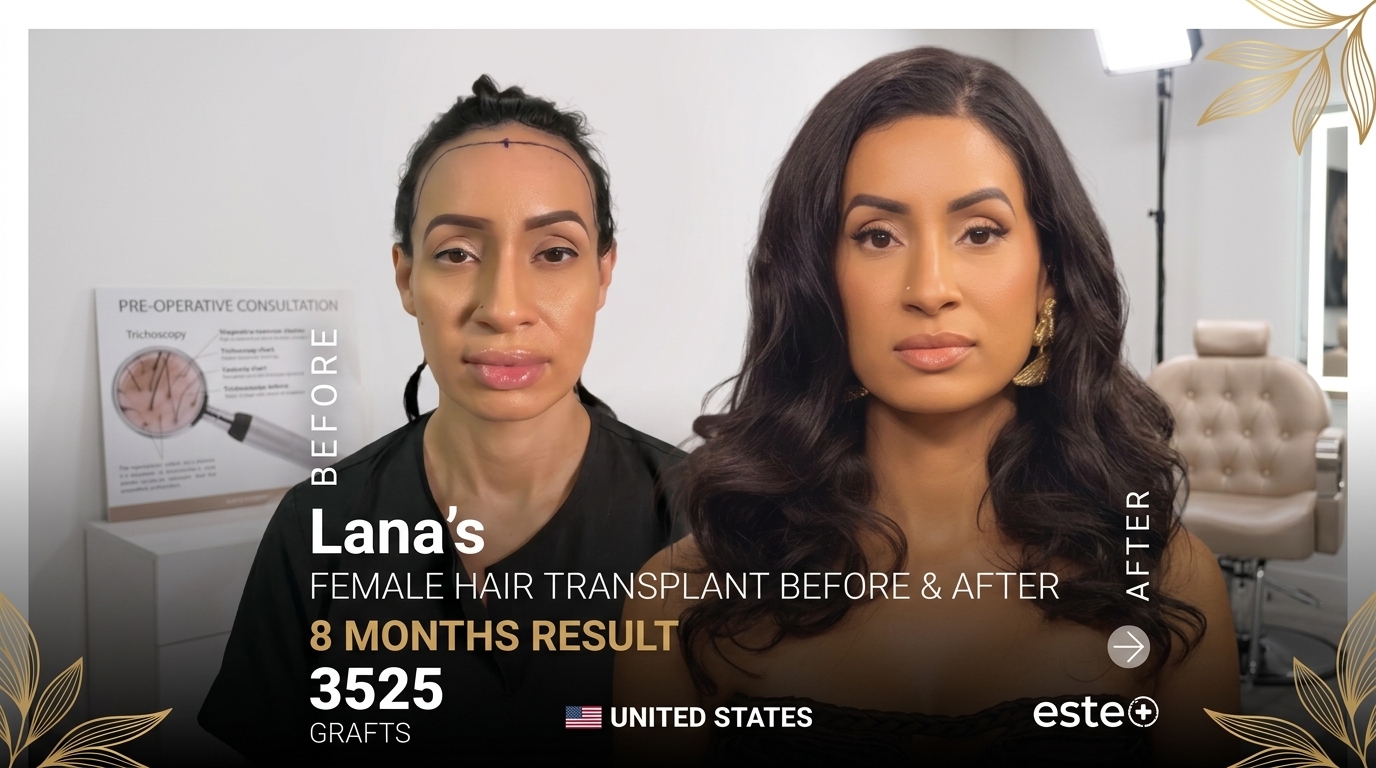
Hair restoration isn't limited to one type of person. Este Medical's published hair transplant stories include public figures such as footballer Kemar Roofe, actor Ferit Kaya, Lana Rae and UFC fighter Jorge Masvidal, who have shared experiences connected with hair restoration at Este Medical.
These individual experiences shouldn't be taken as a guarantee of results. Hair transplant outcomes can differ depending on factors such as hair loss pattern, donor supply and individual healing.
Este Medical Featured In
Este Medical Group has been featured by a range of established media outlets, including USA Today, LA Weekly, OK Magazine, The Mirror, The Sun, The National and Scottish Sun. Coverage has included hair transplants, hair loss, cosmetic treatments and the experiences of Este clients. The group’s press page also includes coverage of its Istanbul clinic and hair transplant work, including features involving Kemar Roofe and other public figures.
FAQs
How long does hair transplant recovery take?
Most individuals experience some redness, mild swelling and small scabs during the first few days. These often settle within around 7 to 10 days, although recovery is different for each person.
When can I wash my hair after a hair transplant?
We provide a guided first wash after treatment and gives you instructions for washing your scalp at home. Follow the timing and technique provided by your clinical team rather than washing the transplanted area as normal immediately after treatment.
How should I sleep after a hair transplant?
During the early recovery period, we recommend sleeping on your back with your head elevated. A travel or neck pillow can help reduce pressure on the transplanted area.
When can I exercise after a hair transplant?
It's best to avoid strenuous exercise during the early recovery period. We advise individuals to take a break from intensive workouts and heavy lifting while the scalp heals.
Can I travel home soon after my hair transplant?
Individuals generally return home after their initial follow-up and first post-operative care. Your clinical team will advise you when you're ready to travel based on your individual treatment and recovery.
Can I sleep normally after a hair transplant?
You'll need to adjust your sleeping position temporarily.
During the early healing period, keep your head elevated and avoid putting pressure on the transplanted area. Your clinical team will provide specific instructions for your recovery.
Do I need to shave my head for a hair transplant?
Not necessarily.
We offer unshaven hair transplant options, including U-FUE and long-hair DHI, for suitable individuals. Your hair loss and donor area will be assessed to determine whether a full shave can be avoided.
Can I get a hair transplant if I have very little donor hair?
A limited donor supply can affect how much coverage can be achieved.
The donor area needs to be assessed before treatment so the clinical team can determine whether enough suitable follicles are available for transplantation.
Can I get a hair transplant without surgery?
Hair transplantation itself is a surgical procedure because follicles are removed from one area and implanted into another.
If you don't want surgery, we also offer non-surgical hair loss treatments. These can be discussed during a consultation to see which options may be relevant to you.
How long does a hair transplant procedure take?
Treatment time depends on factors such as the number of grafts, the technique being used and the extent of the procedure.
Your individual treatment plan will determine how long you'll need to spend at the clinic.
Can I get a hair transplant if I am taking medication?
This depends on the medication and your individual medical circumstances.
Tell the clinical team about all medicines and treatments you're currently taking during your consultation. Don't stop prescribed medication unless your doctor tells you to.
Can I get a hair transplant if my hair loss is still progressing?
Ongoing hair loss needs to be considered before treatment.
The team can assess your current pattern and donor supply to determine whether a transplant is appropriate now or whether it may be better to monitor how your hair loss develops first.
Can I get a hair transplant at 20 or 25?
Age alone doesn't determine suitability.
At 20 or 25, your hair-loss pattern and whether the loss is still progressing need to be considered carefully. An individual consultation can provide a more useful assessment than using age as the only deciding factor.
Our blog also discusses the question of the best age for a hair transplant.
Can I choose my own hairline?
You can discuss your preferred hairline during your consultation.
The final design, however, needs to consider factors such as facial proportions, existing hair, donor supply and the possibility of future hair loss.
Can I get a hair transplant if I have curly hair?
Yes. We treat individuals with curly and coiled hair.
Curved follicles can make extraction and implantation more technically demanding, so the natural curl pattern, growth direction and hair density need to be considered when planning treatment.
What should I compare when choosing a hair transplant clinic?
Look beyond the price.
Compare the qualifications and experience of the clinical team, who performs each stage of treatment, how the procedure is planned, individual results, aftercare and how the clinic handles possible complications.
Can I get a hair transplant if I have grey hair?
Grey hair doesn't automatically prevent you from having a transplant.
Suitability depends more on factors such as your donor hair, hair-loss pattern and scalp condition. These can be assessed during your consultation.
Should I get a hair transplant in my 20s or wait?
There isn't one age that applies to everyone.
If you're in your 20s and your hair loss is still changing, it's worth understanding how that could affect future treatment planning before proceeding. A consultation can help assess your current hair loss, donor supply and whether treatment is appropriate at this stage.