

Expert Medical Care since 2015

18 Clinics UK & Worldwide

300+ Friendly Trained Staff
Expert medical care since 2015
18 clinics worldwide
300+ friendly staff


Expert Medical Care since 2015
18 Clinics UK & Worldwide
300+ Friendly Trained Staff
Expert medical care since 2015
18 clinics worldwide
300+ friendly staff
Eyebrow Transplant Turkey for Natural Shape and Definition
Restore fuller, well-defined eyebrows with a precise, design-led approach focused on symmetry, shape, and natural results.
- Precision placement for natural shape and symmetry
- Designed to enhance and define your features
- Subtle, natural results that blend seamlessly
10,000+ successful procedures performed by our experienced clinical team
4.9/5 Reviews

Oops! Something went wrong while submitting the form.
An eyebrow transplant in Turkey can restore sparse, uneven or over-plucked brows using your own donor hair. At Este Medical Group in Istanbul, suitable follicles are extracted individually with FUE and implanted with DHI so the clinical team can plan the angle, direction and spacing of each new eyebrow hair.
Every brow is designed around the patient’s facial proportions, existing hair and preferred shape. The aim is not to create identical or overfilled eyebrows, but to improve balance, definition and coverage while preserving a natural appearance.
Send clear photographs of your eyebrows and donor area to request an initial assessment. The team will review whether transplantation may be suitable and explain the next steps before travel is arranged.
For a wider overview of techniques, suitability, packages and travelling to Istanbul, read our complete hair transplant Turkey guide.
Eyebrow Transplant at a Glance
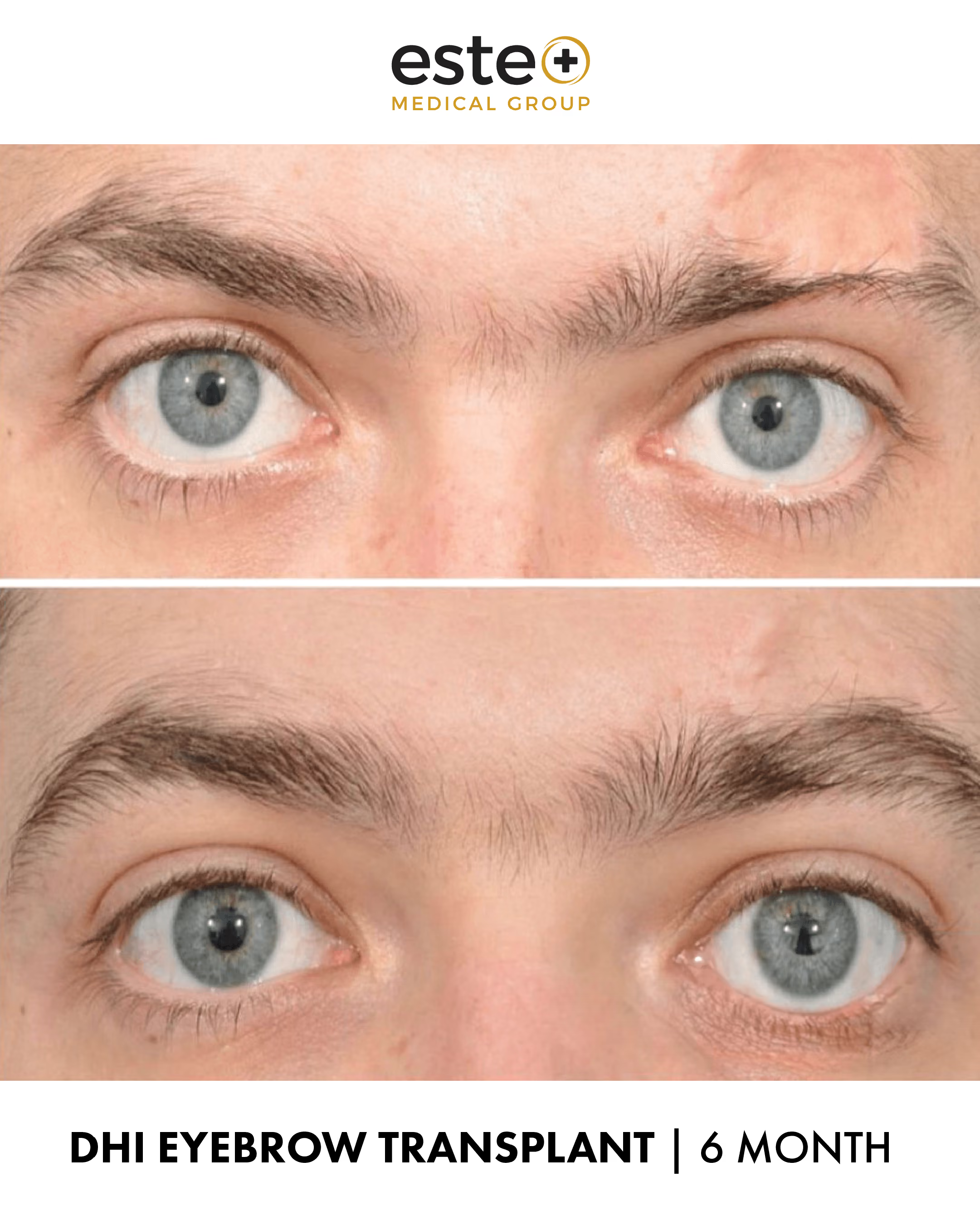
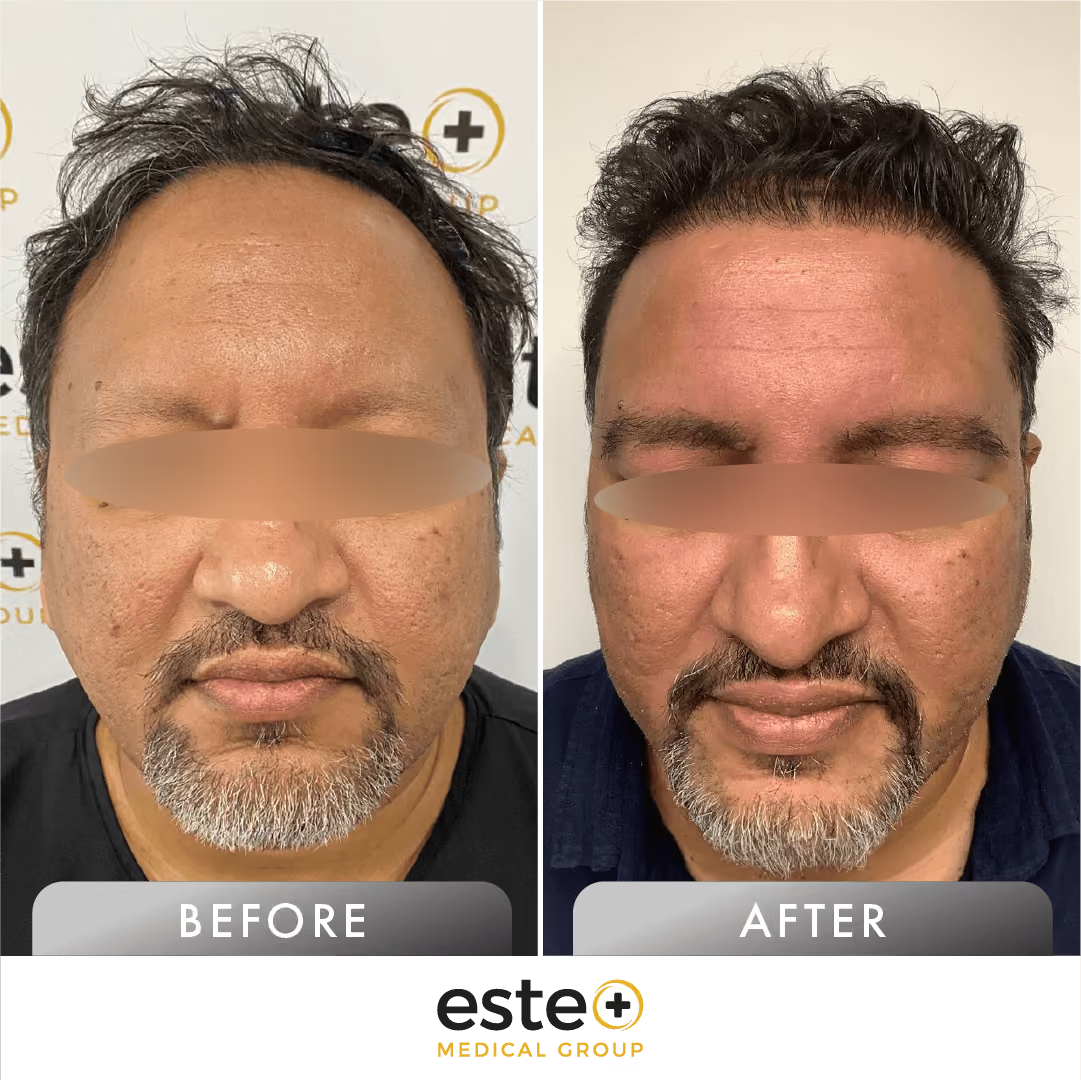
Eyebrow Hair Transplant Before & After
Explore more documented patient cases and treatment outcomes on our Turkey hair transplant before-and-after page.


What Is an Eyebrow Transplant?
An eyebrow transplant is a surgical hair-restoration procedure in which individual follicles are taken from a suitable donor area and placed into sparse or absent areas of the brows. It may be considered for naturally thin eyebrows, over-plucking, uneven growth, selected scars or eyebrow loss that has been medically assessed and is considered stable.
The procedure is different from cosmetic tattooing or microblading because living follicles are transplanted. When those follicles establish successfully, they can continue to produce hair. Because the donor hair usually comes from the scalp, it may grow longer than natural eyebrow hair and require routine trimming.
Meet The Experts
Experience, Expertise & Excellence: Meet the Este Medical Team
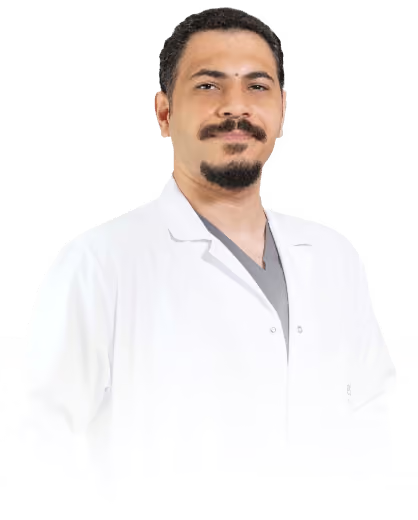
Thaer Mezher, MD
Anaesthesiologist & Pain Management
- Studied Medicine
- Speaks 5 languages
- Specialization in Anesthesia, Intensive Care * Pain Management
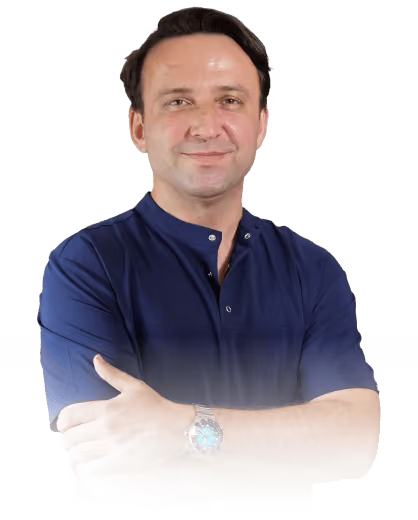
Mesut Köroğlu
Hair Transplant Specialist
- Studied Anaesthesia
- Specialises in Hair Transplant
- 24+ Years Experience

Derya Köroğlu
Hair Transplant Specialist
- Studied Anaesthesia
- Specialises in Hair Transplant
- 20+ Years Experience
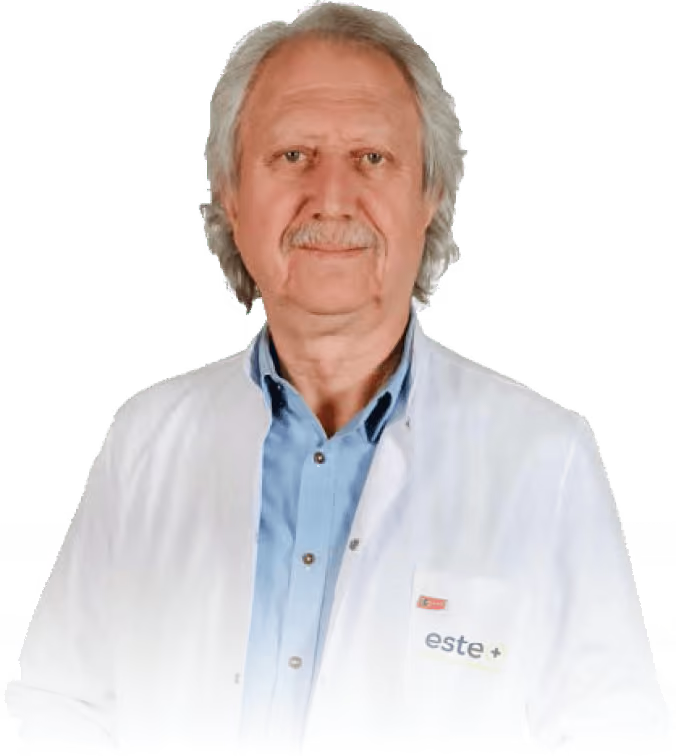
Dr. Alaaddin Karabacak, MD
Expert Hair Transplant Surgeon
- 35+ Years of Experience in Hair Transplants
- 9,000+ Procedures
- Award-Winning Certified Surgeon
- Turkish Society of Plastic, Reconstructive & Aesthetic Surgery
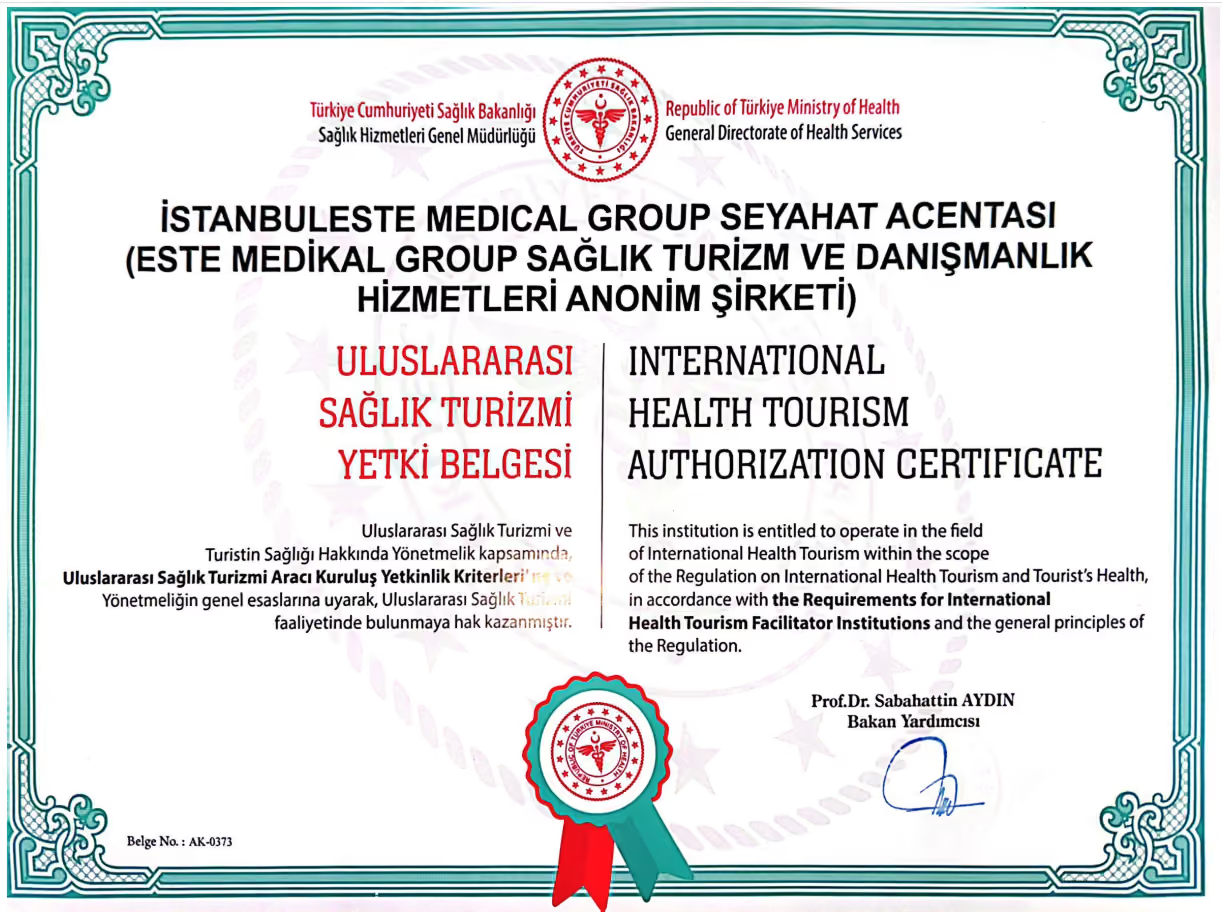
We are a fully licensed Medical Center with an International Health Tourism Authorization Certificate.
How Does Este Perform an Eyebrow Hair Transplant in Turkey?
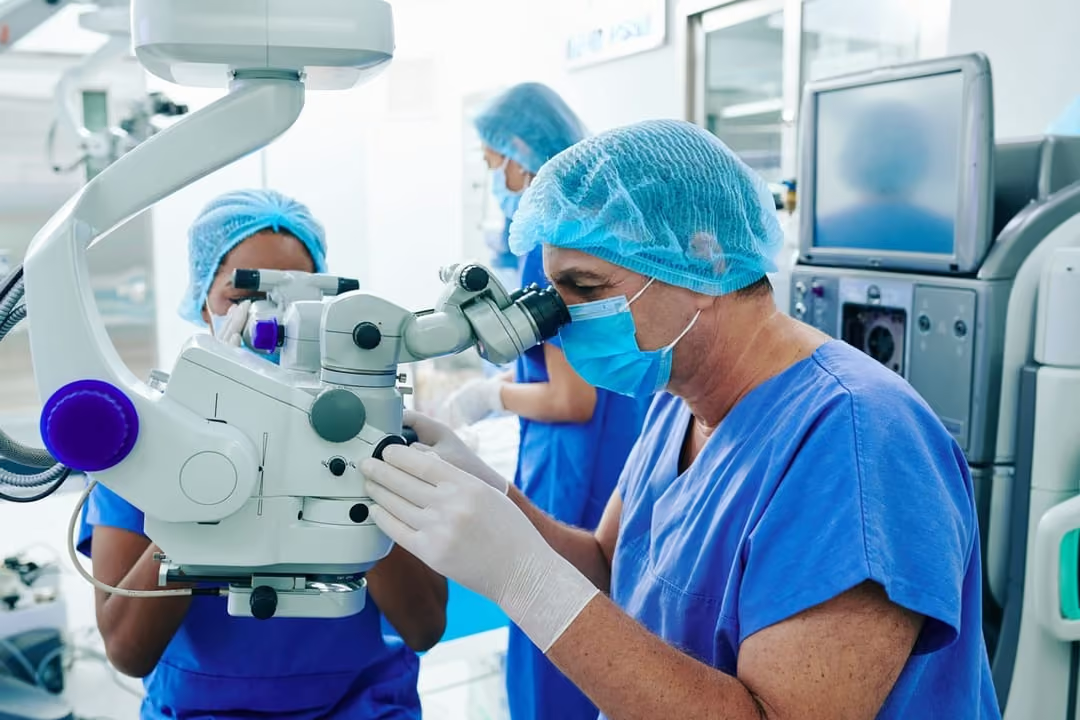
Este combines FUE extraction with DHI implantation for eyebrow restoration. These are two separate hastages of the same treatment plan: Suitable donor follicles are removed individually using FUE extraction before precise DHI implantation is used to control the angle, direction and spacing of each eyebrow graft.

1. Photograph and history review
Derya Köroğlu reviews the photographs and information submitted before the consultation.
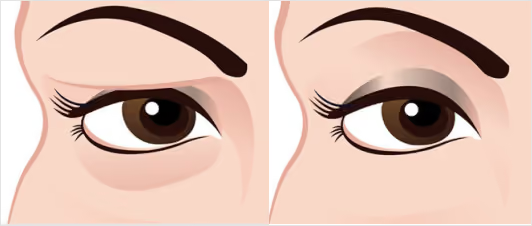
2. Brow design
the proposed eyebrow head, body, arch and tail are mapped according to facial proportions, existing brow hair and the patient’s preferences.
.avif)
3. Graft planning
Dr Alaaddin Karabacak decides the final clinically appropriate graft requirement after the donor area and design have been assessed.

4. FUE extraction
suitable follicles are removed individually from the donor area. Fine single-hair grafts are prioritised where appropriate for natural eyebrow detail.
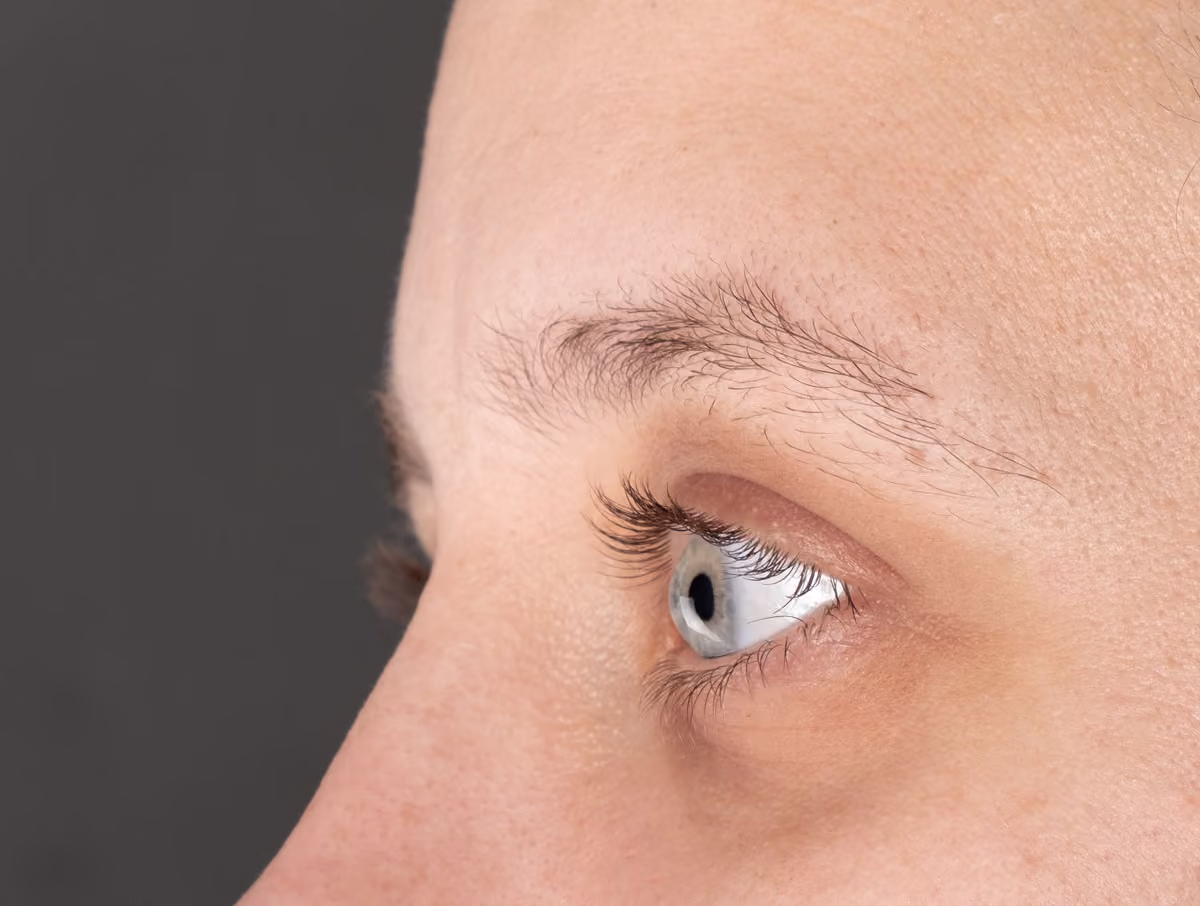
5. DHI implantation
Derya Köroğlu and Mesut Köroğlu place the selected grafts individually, controlling their angle, direction and spacing.
6. Medical supervision
Dr Alaaddin Karabacak is physically present and supervises the procedure.

7. Follow-up
Derya Köroğlu leads the post-treatment assessment and aftercare review.

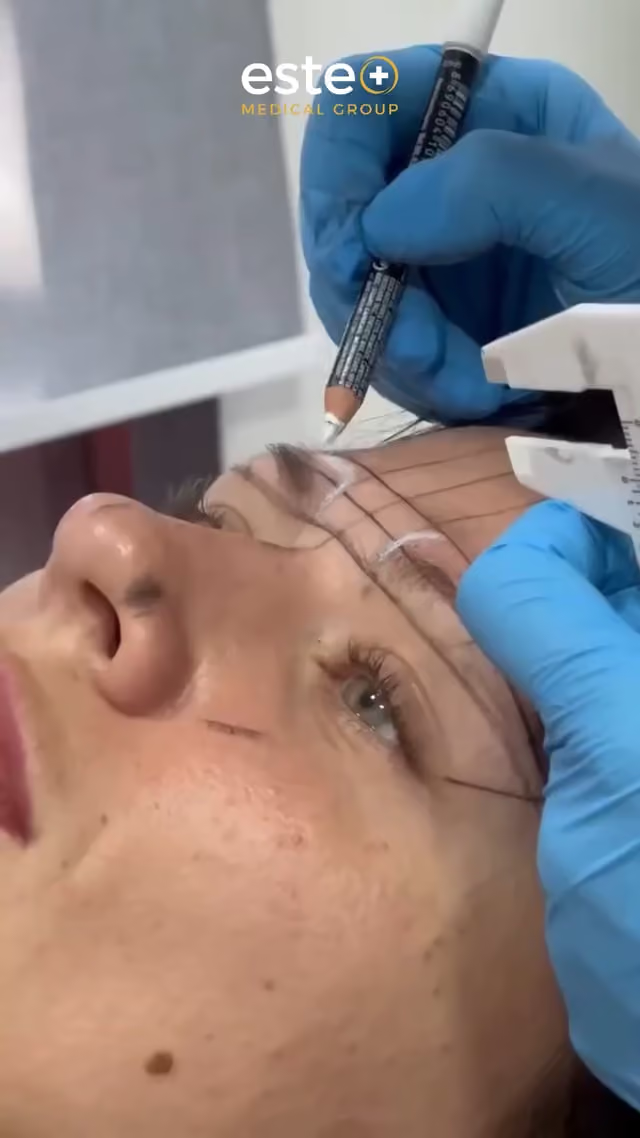
Why Angle and Direction Matter in Eyebrow Restoration
Eyebrow hair does not grow in one uniform direction. Hairs near the inner brow may point more vertically, while hairs across the body and tail usually sit flatter and follow changing directions. If grafts are placed too upright or without respecting these transitions, the result may look unnatural and can be difficult to style.
The implantation plan therefore considers the brow’s head, arch and tail separately. Each follicle is placed at a shallow angle and aligned with nearby hairs wherever possible. Density is built carefully so the eyebrow does not appear block-like or overfilled.
Who May Be Suitable for an Eyebrow Transplant?
An eyebrow transplant may be considered for adults with a suitable donor area and realistic expectations who want to improve sparse, asymmetrical or partially absent brows. Common reasons for seeking treatment include:
- Long-term thinning or naturally sparse eyebrows
- Over-plucking that has not recovered
- Uneven shape or loss of definition
- Selected stable scars or previous trauma
- Loss affecting the eyebrow head, arch or tail
- A desire to improve balance between the two brows
Suitability cannot be confirmed from the appearance of the brow alone. The underlying cause of eyebrow loss should be considered, especially where thinning is recent, progressive, patchy or associated with skin symptoms.
When an Eyebrow Transplant May Not Be Appropriate
Treatment may need to be postponed or may not be recommended when eyebrow loss is active, the underlying cause has not been assessed, the donor area is unsuitable or expectations cannot be achieved safely. Additional medical assessment may be advised for sudden eyebrow loss, active alopecia, untreated skin disease, ongoing inflammation or a history that suggests an underlying medical cause.
A transplant adds follicles to the planned area; it does not treat every condition that causes eyebrow hair loss. The consultation should therefore establish whether surgery is appropriate before travel or payment arrangements are finalised.
Eyebrow Shape, Symmetry and Personalised Design
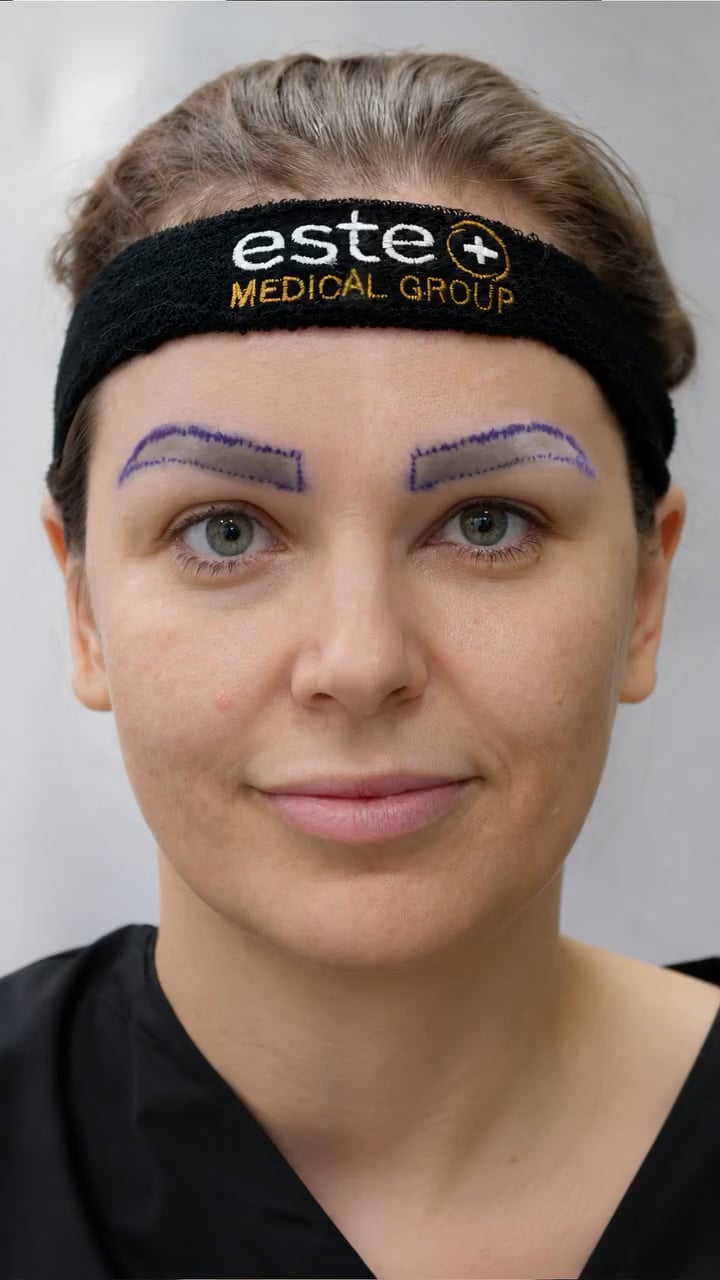
The design stage is central to a natural result. The team considers facial width, brow bone, eye shape, existing hair, natural asymmetry and the patient’s preferred level of definition. A proposed outline is agreed before implantation begins.
The aim is to create brows that complement one another rather than promise perfect mathematical symmetry. Natural faces and natural eyebrows are rarely identical on both sides, and an over-corrected design can look artificial.
Patients considering restoration of another facial-hair area can also explore our beard transplant in Turkey service.
How Many Grafts Are Needed?
The graft requirement depends on how much of the eyebrow is being restored, the desired shape, existing hair, donor-hair characteristics and how much density can be placed safely. Some patients need only targeted work to the arch or tail, while a near-complete reconstruction may require several hundred individual grafts.
Dr Alaaddin Karabacak decides the final clinically appropriate graft number after the design and donor area have been assessed. The goal is balanced coverage, not the highest possible graft count.
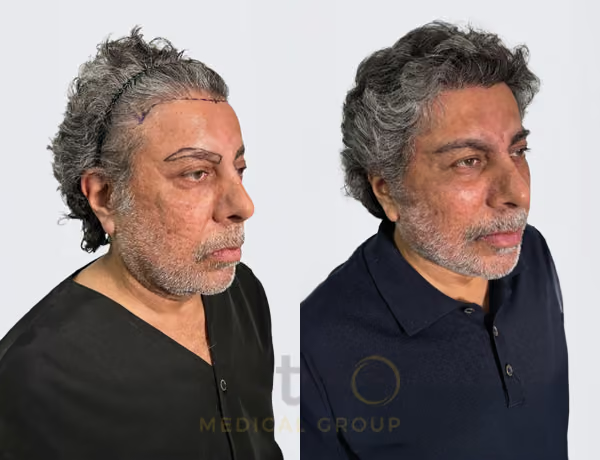
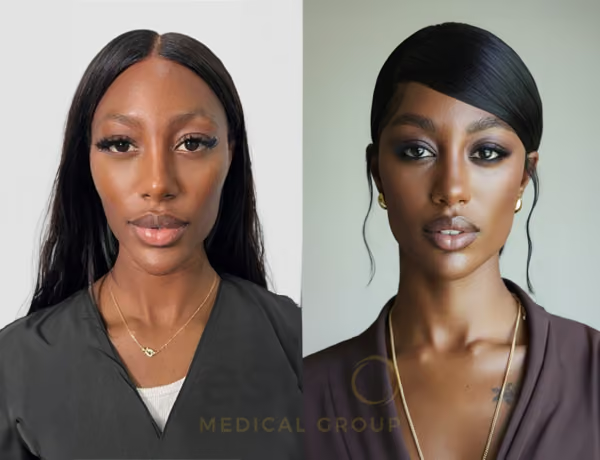
Eyebrow Transplant Turkey Before and After Results


Recovery After an Eyebrow Transplant
Initial healing is usually visible for around a week, although recovery varies. Small crusts, redness, swelling or sensitivity may occur around the donor and recipient areas. Patients receive instructions about cleansing, sleeping position, touching the brows, exercise and products that should be avoided during early healing.
Will Transplanted Eyebrow Hair Need Trimming?
Yes, it may. Donor follicles generally retain characteristics of the area they came from, so scalp-derived hair may grow longer than natural eyebrow hair. Once the transplanted hair is established and the clinical team confirms it is safe, regular trimming and gentle shaping may be needed to maintain the preferred brow length and outline.
Risks, Limitations and Realistic Expectations
An eyebrow transplant is a surgical procedure and no result can be guaranteed. Possible risks and limitations include redness, swelling, crusting, bleeding, infection, folliculitis, temporary shedding, altered sensation, visible donor marks, poor growth, uneven density, asymmetry or hairs growing at an undesirable angle.
A further procedure may sometimes be considered if additional density or refinement is appropriate. Patients should receive individual advice about risks, aftercare and alternatives before deciding to proceed.
Eyebrow Transplant Cost in Turkey
The eyebrow transplant Turkey price is based on the individual graft requirement, design complexity, donor-hair selection and the services included in the treatment plan. Because patients may need anything from a small tail correction to broader eyebrow reconstruction, one fixed price would not accurately represent every case.
After reviewing photographs and discussing the desired shape, Este provides a personalised quotation. The quotation should clearly state what is included, such as clinic treatment, transfers, accommodation, medication, aftercare or follow-up, and what is not included, such as flights.
Speak to an expert today
Who Performs the Eyebrow Transplant?
Derya Köroğlu reviews submitted photographs and supports the eyebrow design and planning process. Dr Alaaddin Karabacak decides the final clinically appropriate graft requirement and is physically present to supervise the procedure. Derya Köroğlu and Mesut Köroğlu perform the FUE extraction and DHI implantation stages, and Derya leads the follow-up assessment.
Dr Alaaddin Karabacak, MD, is a Plastic and Reconstructive Surgeon and Hair Transplant Surgeon with 35 years of stated experience and more than 9,000 performed procedures. Derya Köroğlu and Mesut Köroğlu are Hair Transplant Specialists whose listed experience includes FUE, Sapphire transplantation, DHI, extraction and implantation.
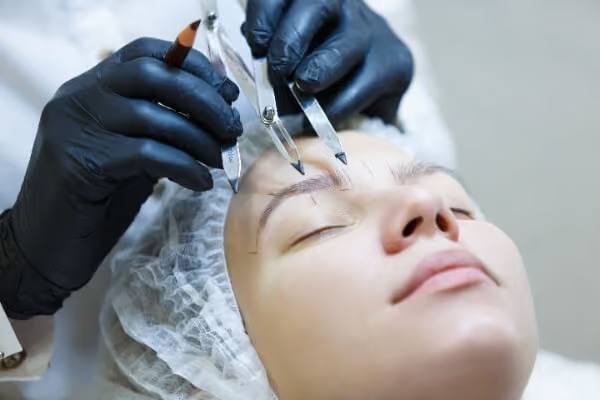
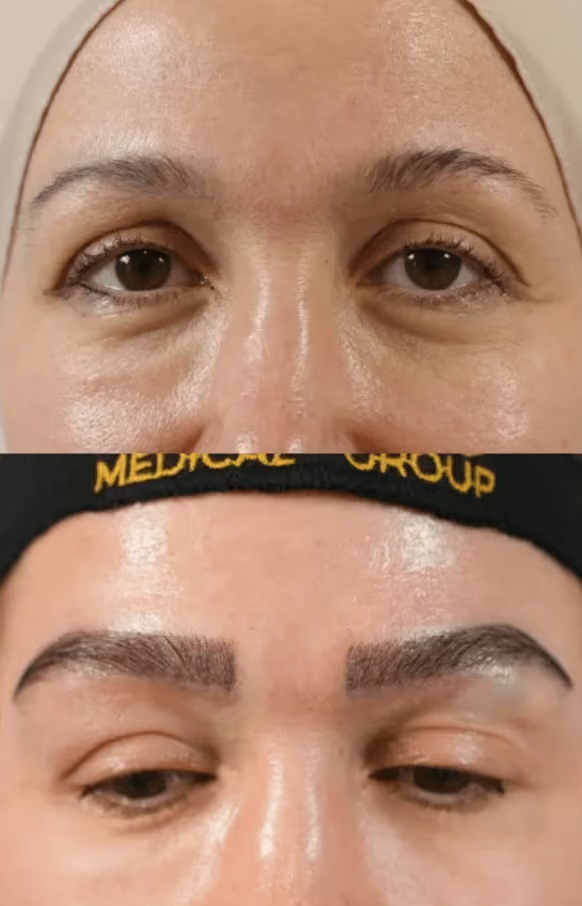
Struggling with Thin, Uneven, or Over-Plucked Eyebrows?
Eyebrows play a key role in framing your face, but achieving full, symmetrical brows isn’t always easy. Whether due to over-plucking, genetics, ageing, or hair loss, many people struggle with sparse or uneven eyebrows that are difficult to correct with makeup alone.
Common concerns we see include:
- Thin or barely visible eyebrows
- Patchy or uneven brow growth
- Over-plucked brows that won’t grow back
- Gaps or scarring in the brow area
- Lack of definition or symmetry
While temporary solutions like pencils and microblading can help, they often require constant maintenance and may not deliver truly natural results. An eyebrow transplant offers a long-term, natural solution.
At Este Medical Group, we restore eyebrow shape and density using advanced techniques such as DHI and FUE, placing each hair individually to match the natural direction and angle of eyebrow growth. This precision is essential for creating soft, realistic results.
Women experiencing broader scalp thinning alongside eyebrow loss may also benefit from the separate assessment explained on our female hair transplant Turkey page.
How to Compare the Best Eyebrow Transplant Clinics in Turkey
Patients comparing the best eyebrow transplant clinics in Turkey should look beyond price or marketing claims. Useful checks include who designs the brows, who extracts and implants the grafts, whether single-hair selection and low-angle placement are discussed, whether the clinic is licensed, whether results show genuine patients, how risks are explained and what follow-up is available after the patient returns home.
Verified eyebrow transplant Turkey reviews can provide additional context, but ratings should be displayed with the platform, review count and date checked. Do not combine Google and Trustpilot figures or use an unverified review count in schema.
Benefits of FUE Eyebrow Transplant in Turkey
As we get older and experience hair loss, hormone changes or illness, our eyebrows change, impacting our overall appearance. Our brow hair can look sparse or have bald spots, or maybe some of us never had good eyebrows from the beginning.
A Follicular Unit Extraction eyebrow transplant essentially fills in the gaps by boosting hair density and volume in the brow as well as increasing hair growth and thickness. With an FUE hair transplant, you can achieve the eyebrows you’ve only ever dreamed of!
Este Medical Group provides the highest quality treatments delivered by the most technically advanced medical grade tools and devices. Follicular Unit Extraction transplants are popular because each hair is moved one by one, resulting in completely natural and healthy-looking eyebrows. With FUE, there is an extremely high degree of surgical control when it comes to hair harvesting and transplanting.
An FUE hair transplant treatment is decidedly successful; high-quality post-surgery results are consistent with the Follicular Unit Extraction technique. In just five months, clients experience visible hair growth - on average 50% hair growth. And within a year most transplant recipients will experience up to 100% hair growth. The best way to find out if you would make a good eyebrow hair transplant Turkey candidate is to have an Este consultation.
- Minimally invasive
- No scalpels, staples or sutures
- No linear scarring
- No downtime
- Immediate results
- Natural looking
Schedule Your Consultation
Curious about the cost of your hair transplant procedure? Fill out the form below to receive a personalized quote from our team.
Oops! Something went wrong while submitting the form.
Frequently Asked Questions
What is an eyebrow transplant and how does it work?

An eyebrow transplant moves individual hair follicles from a suitable donor area, usually the scalp, into sparse or absent parts of the eyebrows. At Este, follicles are extracted with FUE and implanted with DHI so the angle, direction and spacing of each graft can be planned carefully.
Will an eyebrow transplant look natural?
A natural result depends on design, donor-hair selection and precise placement. The brow head, body, arch and tail require different hair directions, so each graft is positioned to follow the planned flow and sit at a shallow angle. Results vary between patients.
Can I reshape or redesign my eyebrows with a transplant?
An eyebrow transplant may restore sparse areas, improve the arch or tail and create better balance between the brows. The proposed design is based on facial proportions, existing hair and your preferences, and is agreed before implantation.
How many grafts are needed for an eyebrow transplant?
The number depends on the size of the area, existing density, donor-hair characteristics and the desired shape. Some targeted corrections need fewer grafts, while broader reconstruction may require several hundred. Dr Alaaddin Karabacak decides the final clinically appropriate graft number after assessment.
How long does an eyebrow transplant procedure take?
Many eyebrow procedures take approximately 2 to 4 hours, but the exact time depends on the design, graft requirement and complexity of placement. Your treatment plan will provide a more specific estimate.
Is an eyebrow transplant painful?
Local anaesthesia is used to numb the donor and eyebrow areas. Patients may feel brief discomfort during the anaesthetic stage and some sensitivity afterwards, but experiences vary.
What is recovery like after an eyebrow transplant?
Redness, mild swelling, sensitivity and small crusts may be visible during the first week. Some transplanted hairs may then shed before new growth begins. Este provides personalised aftercare instructions to protect the donor and eyebrow areas.
When will I see results after an eyebrow transplant?
New growth develops gradually after the early healing and shedding stages. Visible improvement usually appears over the following months, while density and maturity continue to develop later. The timing and final outcome vary between patients.
Will I need to maintain transplanted eyebrow hair?
Yes, scalp donor hair may continue to grow longer than natural eyebrow hair. Once healing is complete and the team confirms it is safe, occasional trimming and gentle shaping may be needed.
What causes eyebrow hair loss?
Eyebrow loss can be associated with over-plucking, ageing, trauma, scarring, skin conditions, hormonal or medical factors and some forms of alopecia. The cause should be considered before treatment, particularly when the loss is recent, active or unexplained.
Will the transplanted hair match my natural eyebrows?
The team assesses hair calibre, texture and colour when selecting suitable donor follicles. Fine single-hair grafts are prioritised where appropriate, but scalp donor hair may not behave exactly like natural eyebrow hair and may require trimming.
Can eyebrow transplants improve uneven or asymmetrical brows?
They may improve balance by adding hair to selected areas, but natural eyebrows and facial features are rarely perfectly identical. The aim is a proportionate, natural-looking improvement rather than guaranteed perfect symmetry.
Am I suitable for an eyebrow transplant?
Suitability depends on the cause and stability of eyebrow loss, the donor area, skin condition, medical history and expectations. Additional medical assessment may be advised when loss is sudden, progressive, patchy or linked to an active condition.
Who performs eyebrow transplants at Este Medical Group?
Derya Köroğlu reviews submitted photographs and supports the design process. Dr Alaaddin Karabacak determines the final clinically appropriate graft requirement and supervises the procedure in person. Derya Köroğlu and Mesut Köroğlu perform the FUE extraction and DHI implantation stages, with follow-up assessment led by Derya Köroğlu.
How much does an eyebrow transplant cost in Turkey?
The cost depends on the graft requirement, design complexity, donor-hair selection and package inclusions. After reviewing your photographs and goals, Este provides a personalised quotation rather than applying one fixed price to every patient.
Is microblading the same as an eyebrow transplant?
No. Microblading places pigment into the skin to imitate brow hairs, while an eyebrow transplant moves living follicles into the brow area. The options have different maintenance requirements, risks and suitability, so patients should compare them according to their goals.