
Expert Medical Care since 2015

18 Clinics UK & Worldwide

300+ Friendly Trained Staff
Expert medical care since 2015
18 clinics worldwide
300+ friendly staff


Expert Medical Care since 2015
18 Clinics UK & Worldwide
300+ Friendly Trained Staff
Expert medical care since 2015
18 clinics worldwide
300+ friendly staff
Beard Transplant in Turkey for Natural Shape and Density
Enhance your beard with a tailored transplant designed to improve density, fill patchy areas, and create a well-defined, natural look.
- Custom beard design to suit your face and style
- Ideal for filling patchy or uneven growth
- Natural-looking results you can shave and style
10,000+ successful procedures performed by our experienced clinical team
4.9/5 Reviews

Oops! Something went wrong while submitting the form.
A beard transplant in Turkey can add coverage to patchy areas, strengthen the jawline, connect the moustache and beard, rebuild sideburns or create a beard shape that better suits your face. At Este Medical Group in Istanbul, facial-hair restoration is planned around your existing growth, donor-hair characteristics and the natural angle of each beard zone.
Your submitted photographs are reviewed before travel, followed by an in-person donor and facial assessment. The final graft number is decided according to what can be taken safely and what is realistically needed for the chosen design. Every procedure is individually planned; no fixed graft number or identical beard pattern is suitable for everyone.
For a broader overview of techniques, suitability, packages and travelling for treatment, read our complete hair transplant Turkey guide.
Beard Transplant Turkey: At a Glance
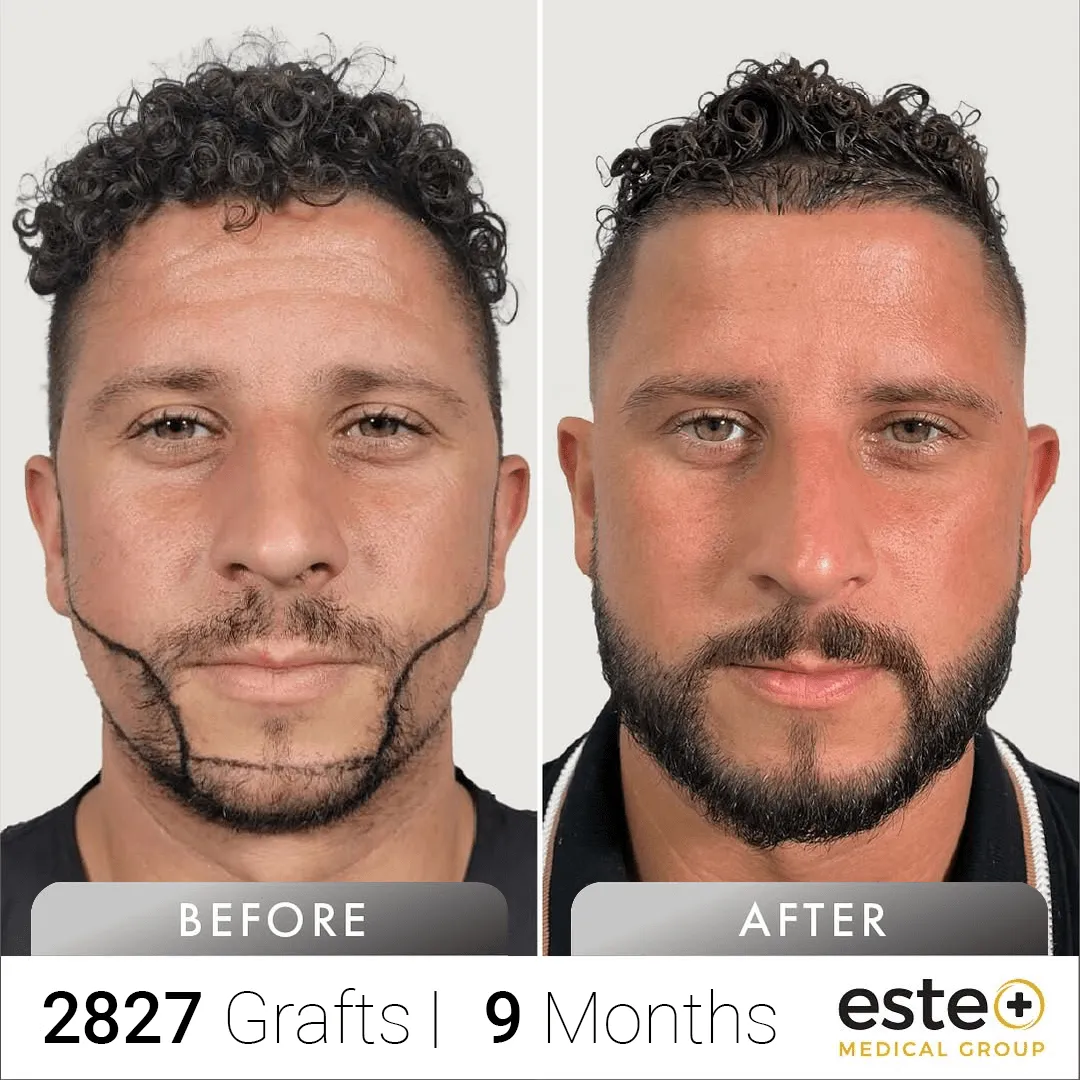
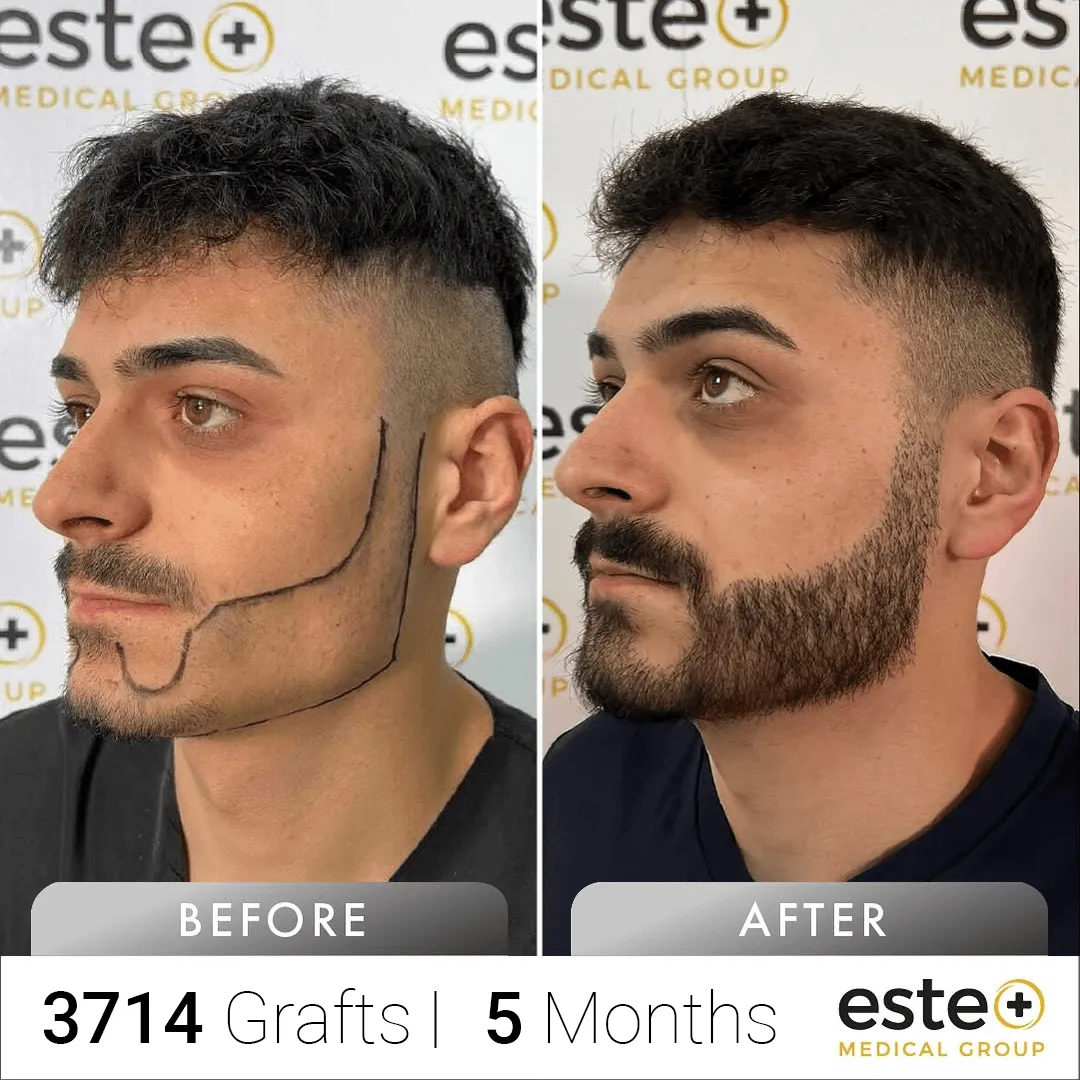
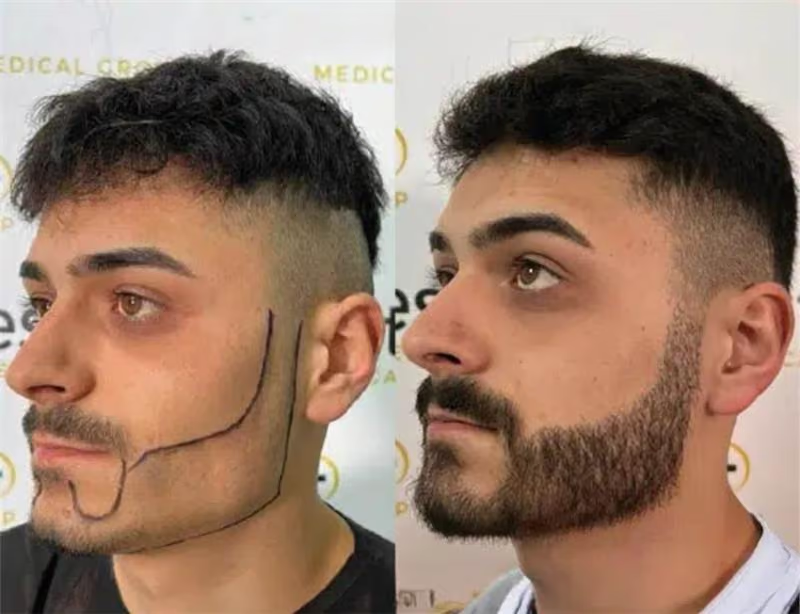
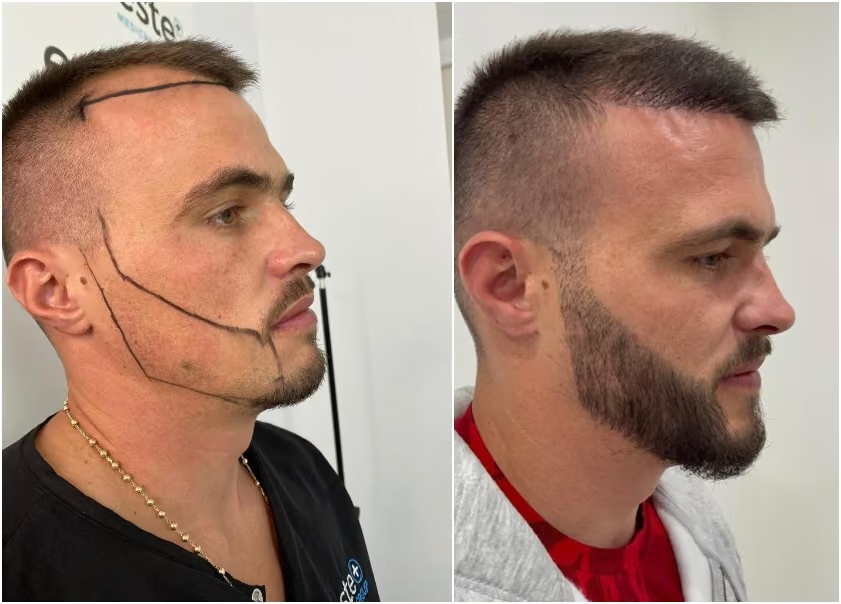
Real Beard Transplant Results at Este Medical Group
Explore more documented patient cases and growth stages on our Turkey hair transplant before-and-after page.

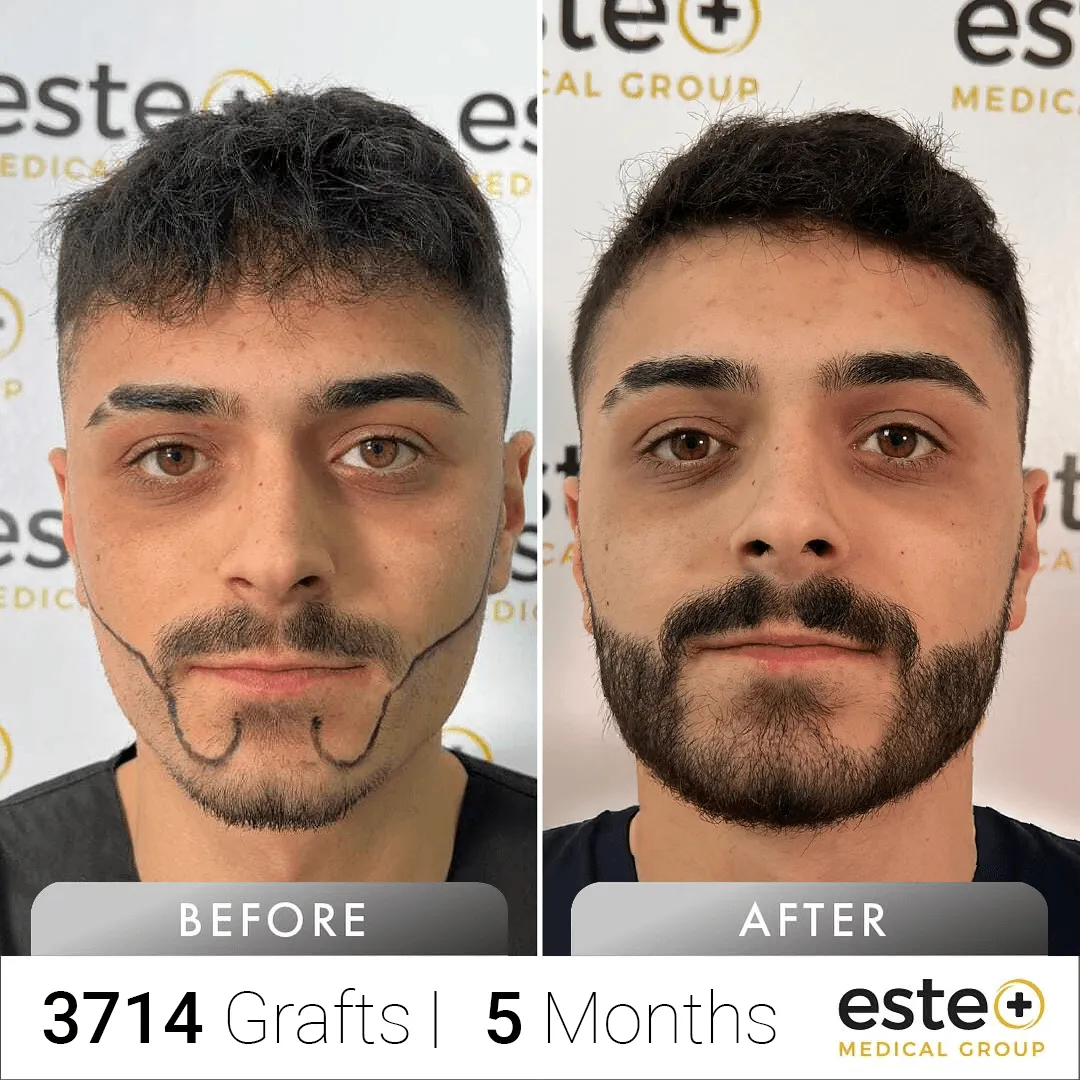
What Is a Beard Transplant and How Does It Work?
A beard transplant moves suitable hair follicles from a donor area, usually the back or sides of the scalp, into selected facial areas. The follicles are extracted individually and then placed to follow the changing direction of natural beard growth across the cheeks, jaw, chin, moustache and sideburns.
The procedure is not simply about adding the highest possible number of grafts. Natural-looking facial hair depends on careful design, appropriate density and very shallow, controlled placement. A graft positioned at the wrong angle or depth may grow unnaturally or create avoidable skin problems, which is why facial-hair restoration requires detailed planning and experienced execution.
What Can a Beard Transplant Treat?
A beard hair transplant may be considered for adults with a stable donor area who want to improve one or more of the following:
- Patchy or uneven beard growth
- Limited density along the cheeks or jawline
- A moustache that does not connect with the beard
- Thin or absent sideburns
- A goatee or chin area that lacks definition
- Naturally sparse facial hair
- Selected gaps caused by a stable scar, subject to assessment
- Asymmetry that can be improved through careful graft placement
A consultation is needed to determine whether the concern can be improved safely and whether the donor hair is a suitable visual match for facial hair.
Meet The Experts
Experience, Expertise & Excellence: Meet the Este Medical Team
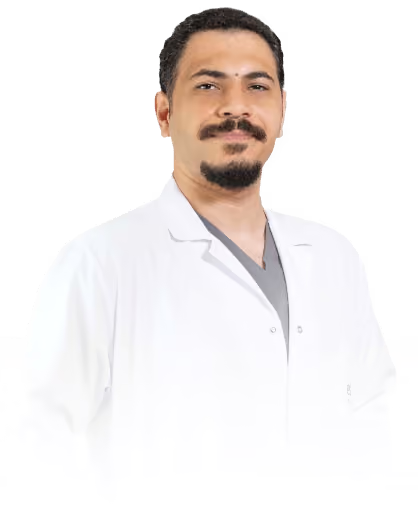
Thaer Mezher, MD
Anaesthesiologist & Pain Management
- Studied Medicine
- Speaks 5 languages
- Specialization in Anesthesia, Intensive Care * Pain Management
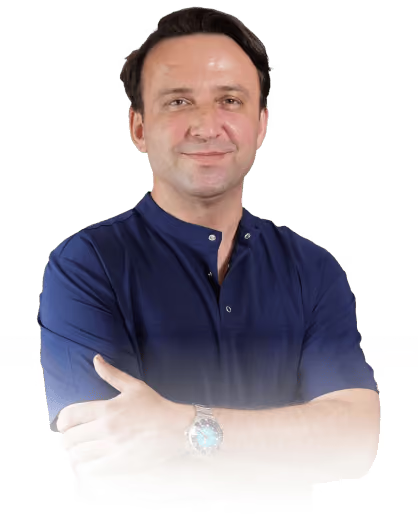
Mesut Köroğlu
Hair Transplant Specialist
- Studied Anaesthesia
- Specialises in Hair Transplant
- 24+ Years Experience
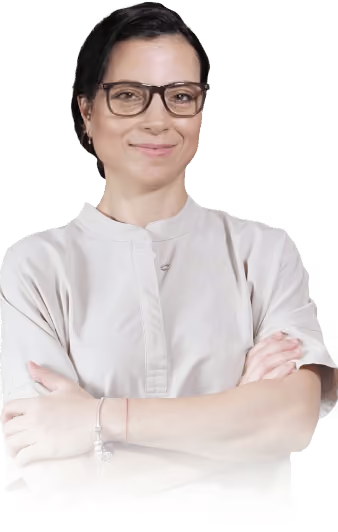
Derya Köroğlu
Hair Transplant Specialist
- Studied Anaesthesia
- Specialises in Hair Transplant
- 20+ Years Experience
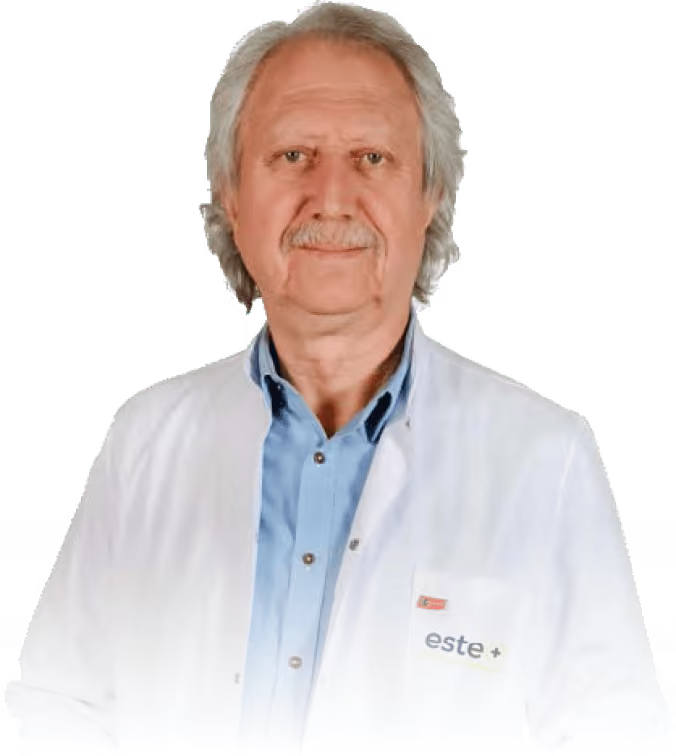
Dr. Alaaddin Karabacak, MD
Expert Hair Transplant Surgeon
- 35+ Years of Experience in Hair Transplants
- 9,000+ Procedures
- Award-Winning Certified Surgeon
- Turkish Society of Plastic, Reconstructive & Aesthetic Surgery
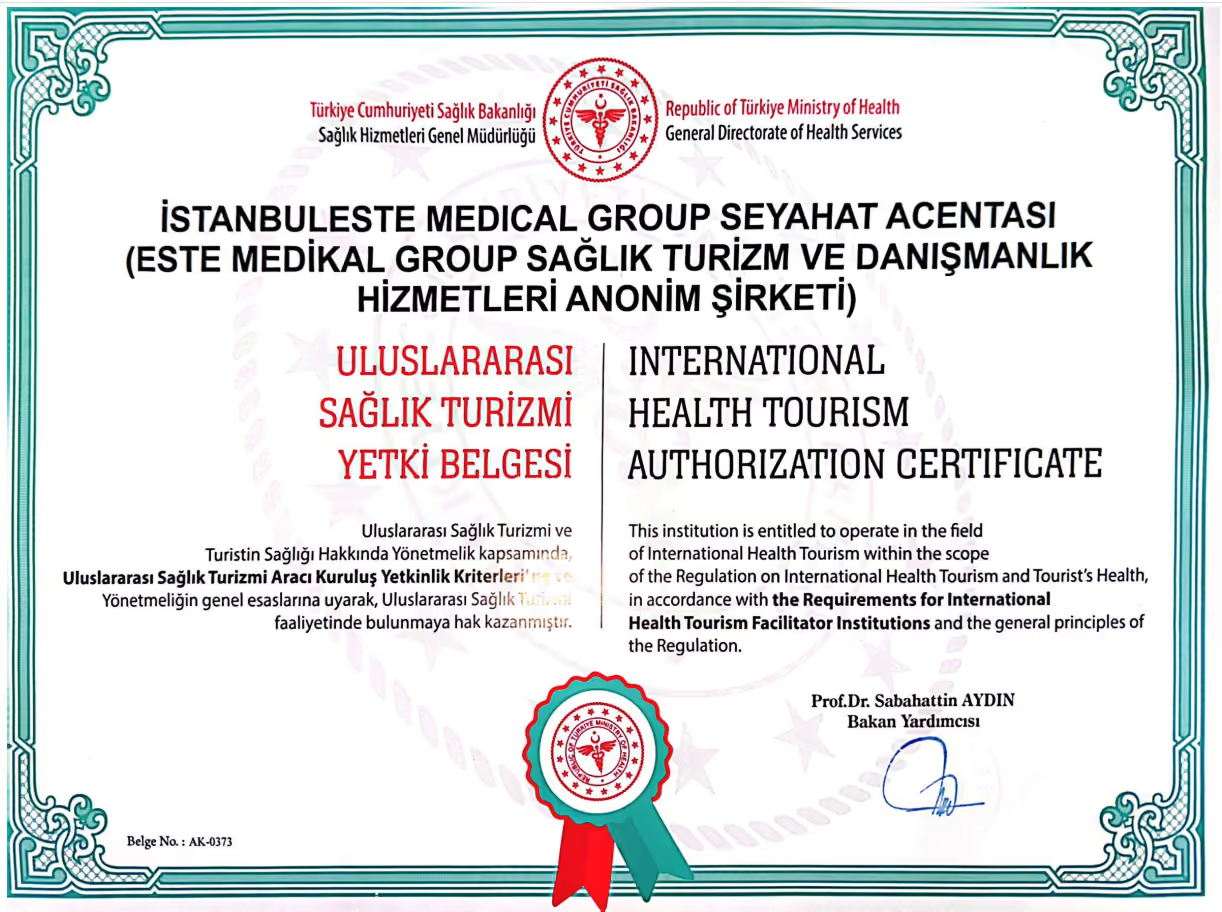
We are a fully licensed Medical Center with an International Health Tourism Authorization Certificate.
Speak to an expert today
How Is the Beard Shape Designed?
Beard design should complement the face rather than follow a standard template. During planning, the team considers facial width, jaw shape, cheek height, moustache pattern, existing beard growth, hairstyle, age and the amount of donor hair available.
The proposed outline is discussed before treatment. Patients can express a preferred style, but the final plan must remain realistic and account for how transplanted scalp hair will grow and need grooming over time.
Patients with tightly curled or Afro-textured donor and facial hair may require an adapted extraction and placement plan; read more about Este’s approach to an Afro hair transplant in Turkey.
Different Beard Zones Need Different Placement
Este also offers eyebrow transplant procedures in Turkey for patients considering restoration of another facial-hair area.
Why Do Angle and Direction Matter So Much?
Facial hair changes direction across very short distances. Hair on the upper cheeks generally lies flatter, jawline hairs may sweep downwards, and chin or moustache hairs can follow different patterns again. Each graft therefore needs to be placed according to its exact location, not according to one universal angle.
Natural design also uses a thoughtful mix of finer single-hair grafts at visible edges and stronger grafts where more body is needed. The available graft types and donor characteristics determine what can be achieved for each patient.
FUE or DHI for a Beard Transplant?
FUE describes the individual extraction of follicular units from the donor area. DHI usually refers to implantation with an implanter device. These terms describe different parts of the process and should not be presented as competing guarantees of quality.
For a beard transplant, the chosen approach depends on graft numbers, treatment zones, hair characteristics and the control needed during placement. Este provides a personalised recommendation after reviewing the donor area and beard design. Detailed technique comparisons should link to the dedicated FUE and DHI pages rather than repeating their full content here.
Patients with tightly curled or Afro-textured donor and facial hair may require an adapted extraction and placement plan; read more about Este’s approach to an Afro hair transplant in Turkey. Este also offers eyebrow transplant procedures in Turkey for patients considering restoration of another facial-hair area.
Am I Suitable for a Beard Transplant?
Suitability depends on having enough stable donor hair, realistic expectations and skin that is appropriate for transplantation. A beard transplant may suit adults with naturally sparse or patchy growth, but it is not automatically appropriate for every gap or area of hair loss.
Treatment may need to be postponed or declined when:
- The donor area is too weak or diffuse
- There is active infection, inflammation or uncontrolled skin disease on the face or scalp
- A scar is still changing or has poor tissue quality
- There is a history of problematic raised or keloid scarring that requires further medical review
- The requested density or outline cannot be achieved safely
- The patient expects transplanted scalp hair to behave exactly like native beard hair
- A medical or psychological concern needs assessment before elective treatment
Patients should share their medical history, current medication, previous surgery, skin conditions and scarring history during consultation.
How Many Grafts Are Needed for a Beard Transplant?
There is no single graft number for a beard transplant. A small patch or moustache connection requires far fewer grafts than rebuilding both cheeks, jawline, chin and sideburns. The final number also depends on existing facial hair, hair calibre, donor density, curl pattern and the spacing that can be achieved safely.
Dr Alaaddin Karabacak decides the final clinically appropriate graft number after assessment. The aim is not to remove the maximum possible amount, but to use the number required for a balanced result while protecting the donor area.
Your Beard Transplant Journey with Este

1. Photograph Review and Initial Consultation
You send clear photographs of your beard and donor areas together with relevant medical information. Derya Koroglu reviews the submitted images and the team discusses your goals, likely treatment zones and travel requirements.

2. In-Person Assessment and Beard Design
At the Istanbul clinic, the donor area, skin and existing facial hair are examined. The beard outline and density plan are discussed and marked with attention to facial proportions and natural beard direction.
3. Graft Planning and Medical Supervision
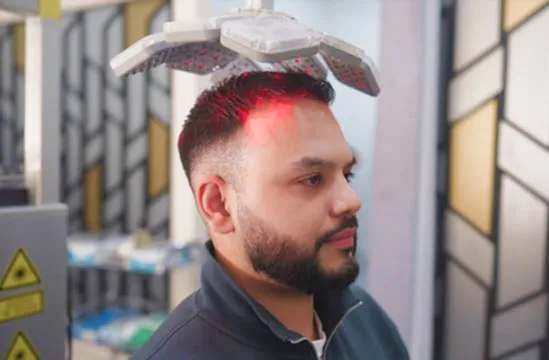
Dr Alaaddin Karabacak confirms the final clinically appropriate graft number and is physically present to supervise the procedure. Local anaesthetic is used to numb the treatment areas.

4. Extraction and Implantation
Derya Koroglu and Mesut Koroglu perform the relevant extraction and implantation stages, placing grafts according to the planned angle, direction and density of each facial zone.

5. Follow-Up and Aftercare
Derya Koroglu carries out the follow-up assessment and the team provides instructions covering cleansing, sleeping position, contact, shaving and the expected growth stages after returning home.
Beard Transplant Recovery and Results Timeline
When Can I Trim or Shave?
Patients should follow the personalised aftercare instructions rather than using a fixed internet timeline. Trimming may be allowed before close shaving, but the exact timing depends on healing. Do not shave over healing crusts or irritated skin. The clinic should confirm the approved date during follow-up.
Risks, Limitations and Realistic Expectations
A beard transplant is a surgical procedure. Possible risks and limitations include redness, swelling, bleeding, infection, folliculitis, temporary numbness, itching, visible extraction marks, uneven growth, poor graft survival, altered pigmentation, raised scarring, cysts, an unnatural outline or direction, and the possibility of revision treatment.
Transplanted scalp hair retains many of its original characteristics. It may grow faster or longer than native facial hair and may require regular trimming. Results vary, and no clinic should promise a completely scar-free procedure, identical density for every patient or guaranteed graft survival.
Alternatives to Consider
- Changing beard style to work with the existing growth pattern
- Cosmetic beard fibres or camouflage products
- Medical or dermatology assessment where facial hair loss is new or unexplained
- Accepting a lower-density design that protects the donor area
- No treatment
How Much Does a Beard Transplant Cost in Turkey?
Beard transplant cost in Turkey depends on the number of grafts, the areas being restored, the complexity of the design, the selected technique and what is included in the international patient package. A small patch or moustache connection is not priced in the same way as full cheek, jawline, chin and sideburn restoration.
After reviewing your photographs, Este provides a personalised quotation. The quote should state clearly whether it includes clinical assessments, treatment, medication, hotel accommodation, airport or clinic transfers, first wash and follow-up support. Flights and any optional supportive treatment should be identified separately.
For further detail on graft-related pricing, packages and personalised quotations, read our complete Turkey hair transplant cost guide.
Travelling to Istanbul for a Beard Transplant
International patients should allow enough time for arrival, in-person assessment, treatment and an initial aftercare review before flying home. A stay of approximately three to four days is a useful planning guide, but the final itinerary should be confirmed by the clinic for the individual procedure.
Speak to an expert today
Frequently Asked Questions
What is a beard hair transplant and how does it work?

A beard hair transplant moves suitable follicles, usually from a stable area at the back or sides of the scalp, into selected facial areas. The grafts are extracted individually and placed according to the changing direction and angle of natural beard growth across the cheeks, jawline, chin, moustache and sideburns.
Can I choose the shape and style of my beard?
You can discuss your preferred shape, coverage and style during planning. The final design should complement your facial structure, existing beard pattern and available donor hair. The team may recommend adjusting an outline or density request when it would not look natural or could not be achieved safely.
Can a beard transplant fill patchy areas?
A beard transplant may improve patchy cheeks, gaps along the jawline, a disconnected moustache or goatee, and selected areas with naturally sparse growth. Suitability depends on the donor area, skin condition and the cause of the gap.
How dense can a beard transplant be?
The achievable density depends on donor strength, hair calibre, curl pattern, existing facial hair and the size of the treatment area. The aim is balanced coverage rather than excessive graft numbers that could compromise the donor or recipient area.
Where is donor hair taken from for a beard transplant?
Donor follicles are usually taken from a stable area at the back or sides of the scalp. The team assesses hair calibre, texture, colour and curl to judge how well it may blend with the existing beard.
How long does a beard hair transplant take?
The procedure usually takes several hours. The exact time depends on the graft number, number of facial zones and complexity of the design. A full beard restoration generally takes longer than treating a small patch or moustache connection.
Is a beard hair transplant painful?
Local anaesthetic is used to numb the donor and recipient areas. Patients may feel brief discomfort during the injections and some tenderness afterwards. It should not be promoted as completely pain-free because individual experiences vary.
What is the recovery process like after a beard transplant?
Redness, small crusts, sensitivity and mild swelling can occur during early healing. The first visible healing phase commonly takes around 7-10 days, although redness may last longer for some patients. Following the washing and aftercare instructions is important.
When can I shave or trim my beard after a transplant?
The clinic provides an individual shaving and trimming schedule based on healing. Trimming may be permitted before close shaving, but patients should not shave over crusts, irritated skin or areas that have not healed. Confirm the timing during follow-up.
When will I see beard transplant results?
Transplanted hairs may shed during the first several weeks. Early new growth often becomes visible after a few months, with more noticeable coverage around 6-9 months and fuller maturation commonly assessed around 9-12 months. Timelines vary.
Will the transplanted beard hair look and behave naturally?
Careful placement can create a natural-looking direction and blend. However, transplanted scalp hair retains many scalp-hair characteristics and may grow faster or longer than native beard hair, so it can require regular trimming.
Am I a suitable candidate for a beard transplant?
Suitability depends on stable donor hair, healthy recipient skin, realistic expectations and the cause of the beard gap. Active skin disease, weak donor density, certain scarring tendencies or unrealistic density requests may mean treatment is postponed or not advised.
Can a beard transplant be used over a scar?
Selected stable scars may be treated, but growth can be less predictable because scar tissue differs from normal skin. The team must assess the scar’s age, thickness, blood supply and previous healing before recommending treatment.
How many grafts will I need?
The number varies by the size and number of treatment zones, existing facial hair and donor characteristics. Dr Alaaddin Karabacak confirms the final clinically appropriate graft number after assessment rather than using one standard figure for every patient.
Do you combine beard transplants with PRP or other treatments?
PRP may be discussed as an optional supportive treatment where clinically appropriate. It does not replace the transplant, and its proposed purpose, evidence, cost and limitations should be explained separately before consent.
Who performs the beard transplant at Este Medical Group?
Submitted photographs are reviewed by Derya Köroğlu. Dr Alaaddin Karabacak confirms the final clinically appropriate graft number and is physically present to supervise the procedure. Derya Köroğlu and Mesut Köroğlu perform the relevant extraction and implantation stages, with follow-up assessment led by Derya Köroğlu.